





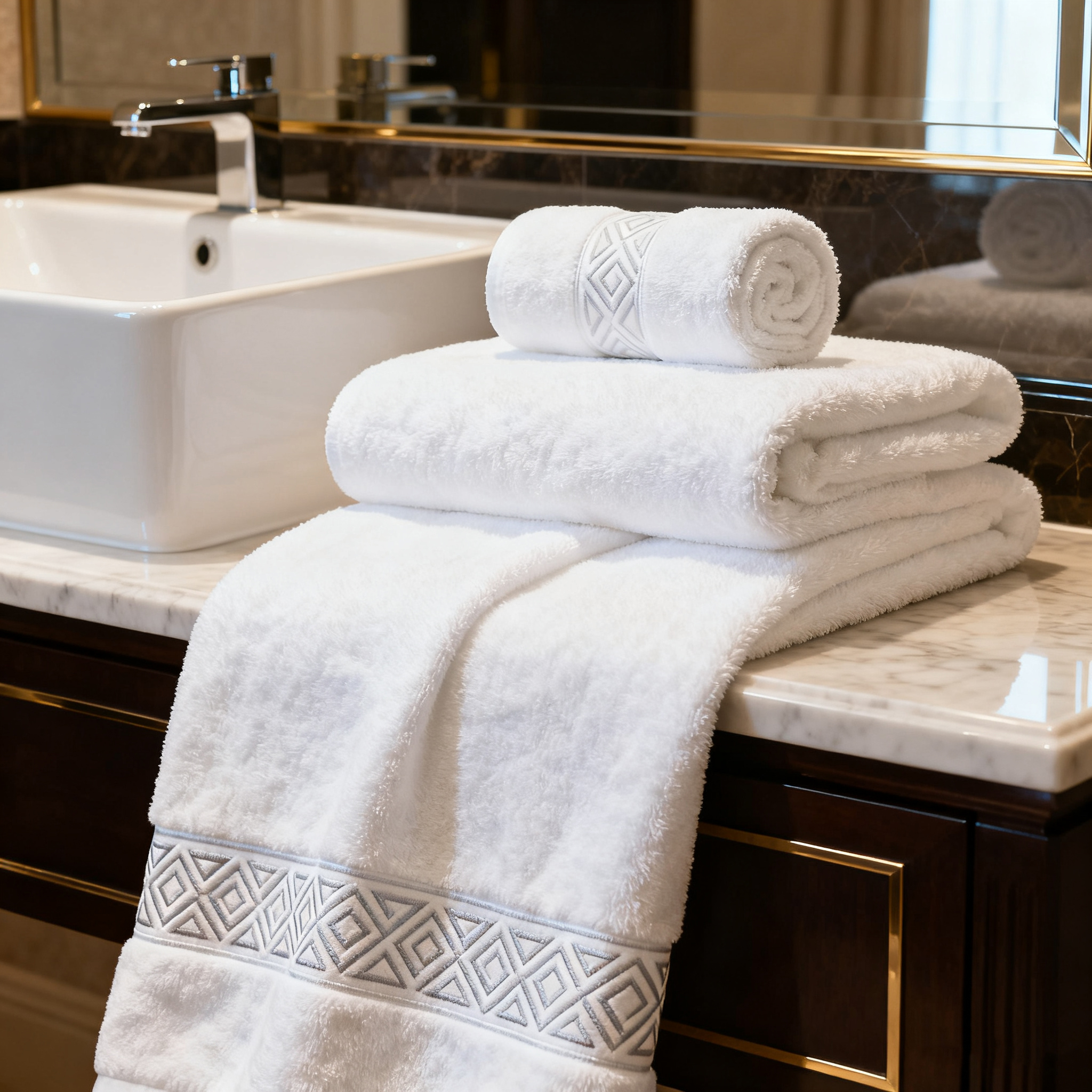
Hambi suggests using hotel-grade bath towels. These towels are made of satin cotton fabric, with exquisite craftsmanship and a smooth texture. They are entirely made of pure cotton and are perfect for use in upscale hotels and residences. Not only are they luxurious in appearance, but they also offer an ultimate comfort experience, making them an excellent choice for improving sleep quality. Whether used in a hotel or at home, these towels will allow you to enjoy a five-star sleep experience!
×
Beyond Softness: A Deep-Dive Discussion on Hotel Towel Quality, Procurement, and Management!
2025-10-31
Beyond Softness: A Deep-Dive Discussion on Hotel Towel Quality, Procurement, and Management
When you step into a luxurious hotel room and casually pick up that fluffy, white, and soft towel, do you ever have a moment of curiosity: Where do these towels that bring comfort and cleanliness to countless travelers come from? How can they withstand the frequent use and intense washing day after day and still maintain their new quality? This is not a simple daily purchase; rather, it is a professional supply chain that runs through global high-quality raw material sources, precise manufacturing processes, strict purchasing standards, and efficient logistics management. This article will take you on an in-depth exploration of the "past and present" of hotel towels and reveal this invisible bridge that creates a luxurious experience.
1.Source material - The "source of life" for high-quality towels
The journey of hotel towels begins in the vast cotton fields. The foundation of their quality entirely depends on the raw materials used. Unlike household towels that pursue diverse styles, hotel towels focus on durability, absorbency, quick drying, and texture as the core indicators, which directly point to the ultimate pursuit of cotton varieties.
The dominion of long-staple cotton:
Egyptian Giza Cotton: Known as "the platinum of cotton". Its fibers are long and strong, and the yarn spun from them is smooth and fine. The towels made from it are exceptionally fluffy, soft and durable, making it the preferred choice for top luxury hotels.
American Pima Cotton: A world-class superior cotton that is on par with Egyptian cotton. It features excellent fiber length and strength, along with good luster and a long-lasting, new-like appearance. It is favored by many five-star hotels.
Xinjiang cotton: Its most notable feature is its excellent water absorption capacity. The fibers of Turkish cotton are hollow, which enables them to quickly absorb and retain a large amount of moisture. At the same time, they have a soft touch, giving a feeling of being gently enveloped, making them ideal for bath towels and bathrobes.
The science of fiber content: Pure cotton is not the only option. To enhance functionality, modern hotel towels also employ blended technology.
The top choice: 100% combed cotton. "Combing" is a process that removes short fibers and impurities, making the yarn smoother and more durable, less prone to shedding fibers. As a result, the towels are more durable and have a better texture.
Functional Enhancement: Cotton and Microfiber Blend. In some hotels focusing on fitness and spa areas, towels made of a blend of cotton and ultra-fine fibers are provided. The ultra-fine fibers give the towels exceptional stain-removal capabilities and quick drying properties, but they have a different texture from traditional cotton towels and are usually used as a functional supplement.
Summary: The "origin" of hotel towels determines their quality. Professional linen suppliers are well-versed in this and they select the most suitable raw materials globally based on the hotel's brand positioning and budget, ensuring the quality foundation of the towels from the very beginning.
2: Craftsmanship Weaving - The Manufacturing Process of Towels
Having superior raw materials is not enough; a meticulous manufacturing process is also required to transform them into a "artwork" for a hotel. Every step on this production line involves a strict attention to detail.
Spinning and Weaving:
Ring spinning: The yarn produced by this traditional process has a dense structure, high strength, and few fringes. The towel fabric woven from it is smooth in appearance and has excellent durability.
Weaving technique: This is the secret behind the fluffy texture of high-end hotel towels. By twisting together two or more yarns to form a "woven yarn", this method significantly increases the volume and fluffiness of the towels, while also making them more durable and capable of withstanding the intense washing in commercial laundries.
Weaving and Structure:
Coarse loop structure: The water absorption and softness of a towel mainly come from the loops on its surface. Hotel towels usually use a high-density, long-loop weaving method. The longer and denser the loops, the more air the towel can enclose, making it fluffier and having a larger space for water absorption and storage.
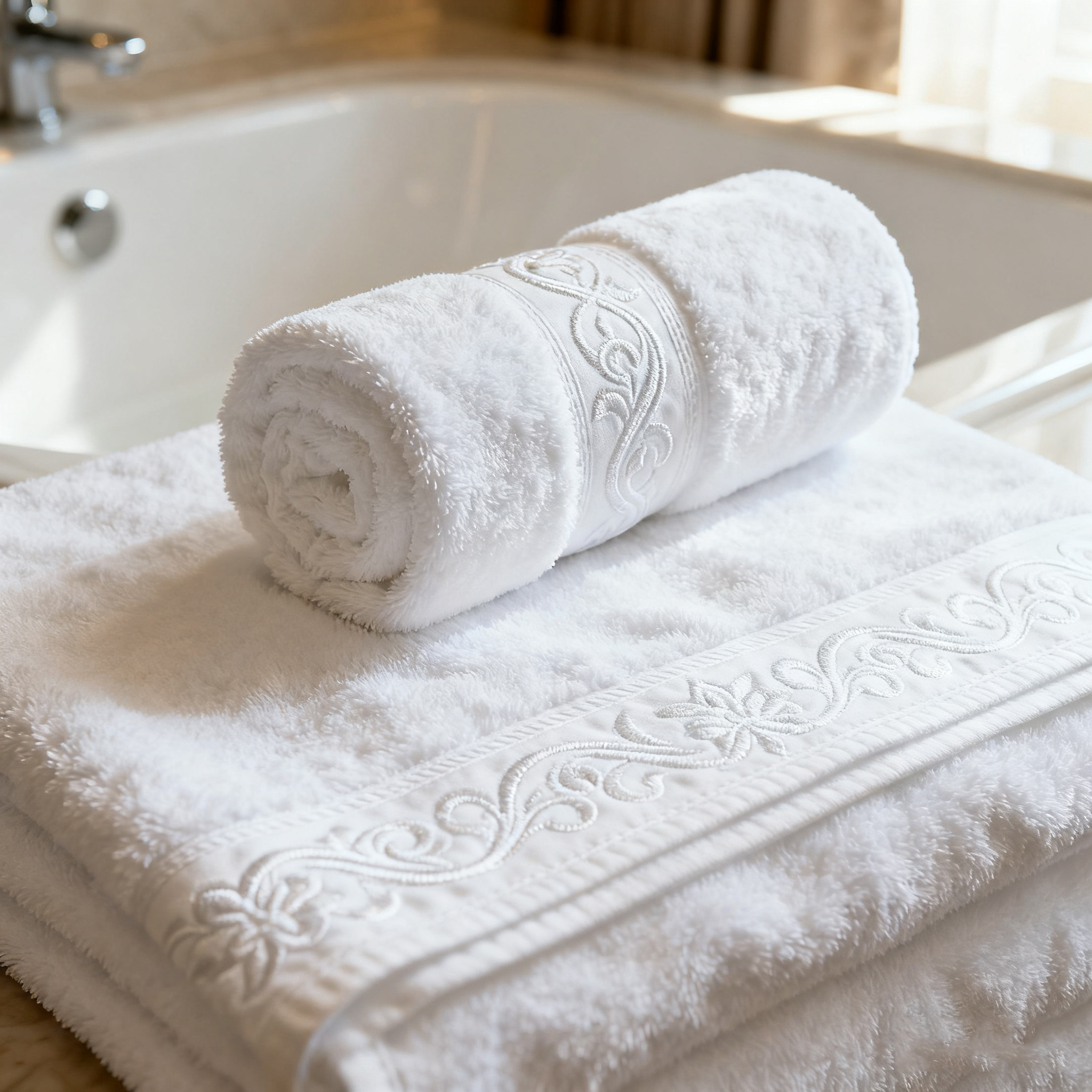
Anti-tear Design: The edges of the towel (especially bath towels) will undergo special reinforcement treatment, such as using a tighter weaving method or a binding process, to prevent tearing due to pulling when washed in commercial washing equipment.
Post-processing and washing:
Desizing, bleaching and dyeing: Remove the sizing from the textiles, and perform bleaching to achieve the required whiteness as per hotel standards, or conduct eco-friendly dyeing. High-end suppliers will use low-tension softeners and eco-friendly dyes to ensure that the products are skin-friendly and harmless.
Pre-washing and softening: The factory-produced towels undergo a special "pre-washing" process. This is not only for the initial softness but also to simulate the commercial washing environment, to stabilize the size and performance of the towels in advance, eliminate residual fibers and chemicals, and ensure that the towels are in the best condition when delivered to the guests.
Summary: The manufacturing process is the key to transforming high-quality raw materials into commercial-grade products. Professional linen suppliers possess advanced production lines and established process standards, ensuring that every batch of towels produced meets the hotel's unified requirements for weight, size, density, and durability.
3: Selecting Carefully - The Strategy and Art of Hotel Towel Procurement
For hotel managers, purchasing towels is a strategic decision that directly affects the guest experience and operational costs. This process is much more than simply "buying a towel"; it is a comprehensive consideration of quality, cost, and management.
Establishing standards: Weight, size and specifications
The hotel towels have a set of professional parameter system:
Weight: Refers to the weight of the towel per square meter (GSM). This directly affects the thickness and absorbency of the towel. Generally, bath towels with a weight of 500-600GSM fall under the standard category, 600-700GSM are considered luxurious, and anything above 700GSM is considered top-of-the-line luxury.
Size: The hotel towels have strict standard sizes, such as face towels, hand towels, bath towels, and floor towels, etc. They need to be uniformly planned to ensure the coordination and professionalism of the towel configuration in guest rooms.
Weaving standards: Clearly define the requirements for the height, density of the loops, and the processing techniques at the edges.
Balance between budget and total cost of ownership:
Initial purchase cost vs. lifespan: A high-quality towel with a higher price may have a lifespan that is 2-3 times longer than that of a cheaper towel. Calculating the cost per use (purchase price ÷ estimated usage times) is more meaningful than simply comparing the unit price.
Factors affecting lifespan: The lifespan of towels is influenced by the type of cotton, the weaving process, the post-treatment technology, and the operational standards of the hotel's own laundry department. Choosing to collaborate with a professional supplier that can provide technical guidance can effectively extend the lifespan of linen and reduce long-term costs.
Supplier selection: Why is a professional linen supplier the only solution?
Product consistency: Professional suppliers can ensure that the colors, sizes and textures of different batches of products are highly consistent, which is crucial for maintaining the hotel's brand image.
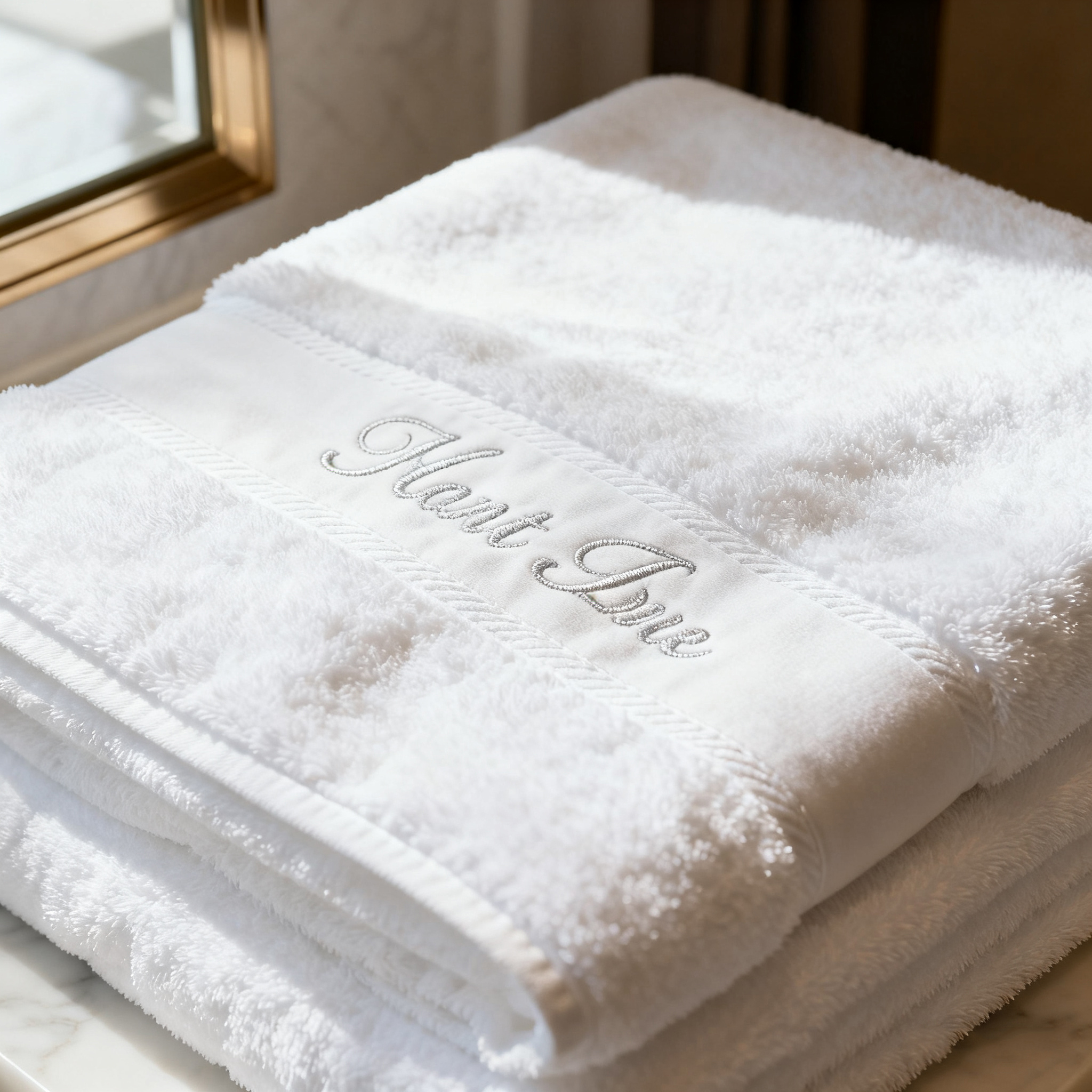
Customized services: We can offer embroidery or label weaving services, integrating the hotel logo elegantly onto the towels. This not only serves as brand promotion but also acts as a security measure.
One-stop solution: Excellent suppliers not only provide towels but also offer a complete set of guest room linens including bedding, bathrobes, mattresses, etc., simplifying the hotel's procurement process and ensuring the uniformity of the overall style.
Professional consultation and support: Just as we, as a seasoned supplier in the industry, have always adhered to, we will provide the most suitable product combination suggestions based on the specific positioning of the hotel (business, resort, luxury), the characteristics of the clientele, and the operating budget. This will help customers find the optimal balance point among factors such as "Hanpi quality, towel manufacturing process, price level, and budget".
Summary: The procurement of towels for hotels is a scientific decision-making process. By establishing long-term partnerships with professional and reliable linen suppliers, hotels not only obtain high-quality products but also receive professional support to enhance operational efficiency and optimize cost structure.
4: Recycling - The "Second Life" of Hotel Towels
When the towels arrive at the hotel, their mission has just begun. Their performance throughout the hotel's lifecycle is also a severe test.
Challenges of commercial laundry: The hotel laundry room uses highly alkaline detergents, hot water, and powerful tumblers. This is an extreme test for the color fastness, fiber strength, and structural stability of the towels. Only towels designed for commercial use can handle this.
Maintenance and Replacement: Professional cleaning procedures (such as neutralizing the pH level and using the appropriate amount of softener) can effectively protect the fibers of the towels. Hotels need to establish a scientific rotation and replacement mechanism to promptly replace damaged, thin, or discolored towels to maintain the quality baseline of guest supplies.
Sustainable Trend: More and more hotels are beginning to pay attention to the environmental recycling of linen. When towels reach their lifespan, some institutions will recycle them, downgrading them to cleaning cloths or donating them. Some suppliers have also started to offer recycling programs, using the old towel fibers to manufacture other products, thus fulfilling their environmental responsibilities.
5: Conclusion - Towels - The Silent Declaration of Hotel Quality
A small towel conveys much more than just moisture. It is the first checkpoint for guests to experience the quality of the hotel, and it is the most direct and private sensory object in the luxurious experience. From a plant in the cotton field to a warm white streak in the guest room, it has traversed a long journey that integrates global high-quality resources, modern industrial wisdom, and meticulous operation management.
Choosing the right towels is choosing a respectful attitude towards guests and a firm commitment to brand reputation. As hoteliers, understanding the secrets of this supply chain and working with professional partners is necessary to win the hearts of guests in this competition of details with a silent softness.
(Regarding Us)
As a one-stop service provider in the hotel industry, we are well aware of the significance of a high-quality towel in creating an excellent guest experience. We not only offer a comprehensive product line covering guest rooms and broader areas, but also have a professional consulting team that can provide you with a full range of solutions based on your specific needs, including fiber content, weaving method, towel weight, price and budget. We firmly believe that the right choice begins with a professional conversation. Please feel free to inquire at any time, and let us jointly lay the most solid foundation for the luxurious experience of your hotel.
ReviewsNumber of comments: {{ page.total }}
I want to comment?
{{item.nickname ? (item.nickname.slice(0, 2) + '*****') : item.source === 1 ? 'mall buyer' : '--'}}
{{item.comment_time}}
Review in the {{item.country}}
Reviews
Merchant
{{replyItem.nickname ? (replyItem.nickname.slice(0, 2) + '*****') : replyItem.source === 1 ? 'mall buyer' : '--'}}
{{replyItem.parent_nickname ? (replyItem.parent_nickname.slice(0, 2) + '*****') : '--'}}
{{replyItem.is_merchant_reply === 1 ? replyItem.reply_time : replyItem.comment_time}}
Review in the {{replyItem.country}}
Reviews

No customer reviews
If you have more questions, write to us
Just leave your email or phone number in the contact form so we can send you a free quote for our wide range of designs!
Recommended
2023
01
11
We manufacture an extensive range of Premium and Luxury Bed linen, Bath linen, towels, Bed Sheets, mattress, pillows, and Hospital Linen products that are perfectly designed for the hospitality and hospital industry.
Telephone: 0771-5585836
Email: hanbiyan1@gmail.com
Phone: +86 15878178593
WhatsApp: +86 15878178593
WeChat: 15878178593
Address: Shop No. 201, 2nd Floor, Building 17, Nanning Country Garden Times City, No. 496 Kunlun Avenue, Santang Town, Xingning District, Nanning City, Guangxi Zhuang Autonomous Region
Copyright © 2026 HANBI - www.hanbi-hotelsupplies.com | Sitemap Privacy Policy