





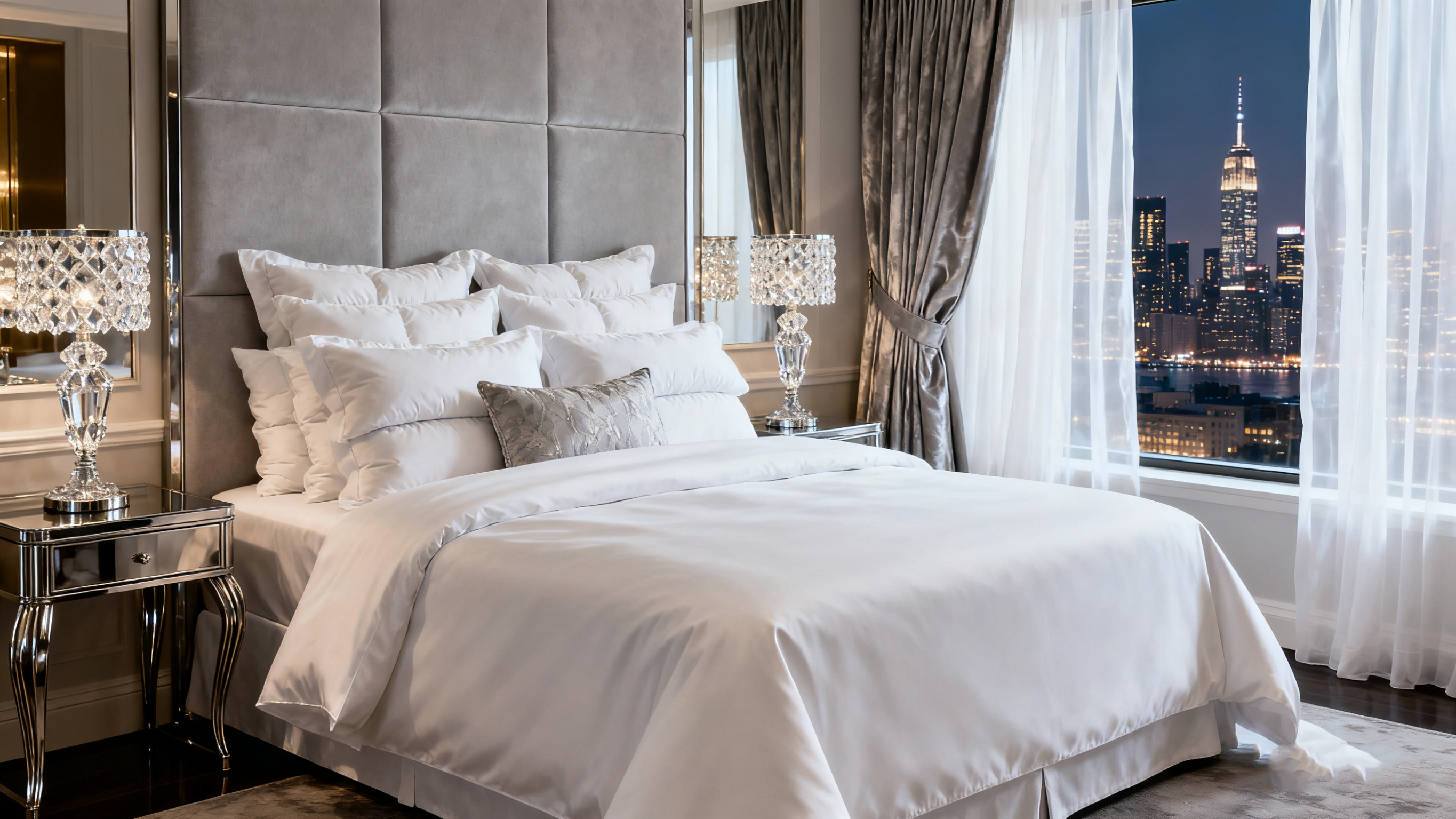
Hambi recommends using hotel-grade bedding. These bedding items are made of satin-cotton fabric, with exquisite craftsmanship and a smooth texture. They are entirely made of pure cotton and are perfect for use in upscale hotels and residences. Not only are they luxurious in appearance, but they also offer an ultimate comfort experience, making them an excellent choice for improving sleep quality. Whether used in a hotel or at home, these bedding items will allow you to enjoy a five-star sleep experience!
×
Building a Hotel Sleep Sanctuary: How to Choose and Maintain Hotel-Grade Bedding !
2025-09-11
Building a Hotel Sleep Sanctuary: How to Choose and Maintain Hotel-Grade Bedding
Bring the luxurious sleep experience of a hotel back to your own home. No longer is it a dream to have a hotel that offers such luxurious sleep. Through wise choices and proper care, everyone can enjoy the quality of a five-star sleep in their daily lives. This article will serve as your ultimate guide, from understanding the secrets of labels to mastering professional maintenance skills, to comprehensively upgrading your hotel sleep environment.
Decoding the bedding labels: Beyond count and density
When choosing hotel-grade bedding, most people only focus on the count and density, but there are other key indicators that are also worth noting:
Fiber length: High-quality cotton usually uses long-staple cotton (such as Egyptian cotton, Pima cotton, or Xinjiang long-staple cotton), with fiber lengths exceeding 34mm. Longer fibers can produce finer and stronger yarns, while reducing surface fuzz and enhancing smoothness.
Yarn structure: Seek for "single yarn" (Single-ply) rather than "double yarn" (Two-ply). Single yarn is made from a single fiber bundle and is softer; double yarn, on the other hand, combines two fine yarns and is more durable but slightly harder.
Weaving method: Besides gongzhan (cotton fabric), you can also consider the "percale" (plain weave) option. Percale is also woven with high count and high density, but it presents a matte effect rather than a glossy one. People who prefer a refreshing touch might prefer it.
Certification mark: Look for the OEKO-TEX Standard 100 (free of harmful substances), GOTS (organic standard), or Supima (American Pima cotton certification) among others. These marks ensure the quality and sustainability of the products.
Building a complete sleep system: More than just a bedsheet
The hotel sleep experience stems from the synergy of the entire sleep system, which includes:
Mattress Protector: High-quality hotels add a protective pad between the mattress and the bed sheet. This not only protects the mattress but also adds an extra layer of softness. Choose a breathable and waterproof protective pad, which can prevent stains while not affecting the breathability.
Bed Skirt: Besides its aesthetic function, the bed skirt also prevents dust from accumulating in the bottom space of the bed, which is particularly important for people with allergies.
Pillow set: Hotels usually offer a variety of pillow options (down, memory foam, synthetic fibers) to cater to different sleeping posture preferences. Consider equipping your bedroom with at least two types of pillows.
Layering strategy: The hotel adopts a layered bedding method: mattress cover → fitted sheet → flat sheet → quilt. This layered approach provides better temperature regulation and comfort. You can give it a try at home.
Size Guide: Ensure Perfect Fit
Before purchasing, accurately measure the size of your mattress and bedding:
Mattress thickness: Modern mattresses are getting thicker and standard fitted sheets may no longer be suitable.
Quilt size: European-style quilts are usually square, while American-style ones are rectangular.
Pillow size: Standard size, Queen size or King size? Inconsistent size can affect appearance and comfort.
For thick mattresses, look for "deep pocket" bed sheets, which are usually designed to accommodate mattresses that are 40cm or more in thickness. The elastic band corners design can better secure the bed sheet and prevent it from shifting during sleep.
Maintenance Science: Professional Tips for Extending Bedding Lifespan
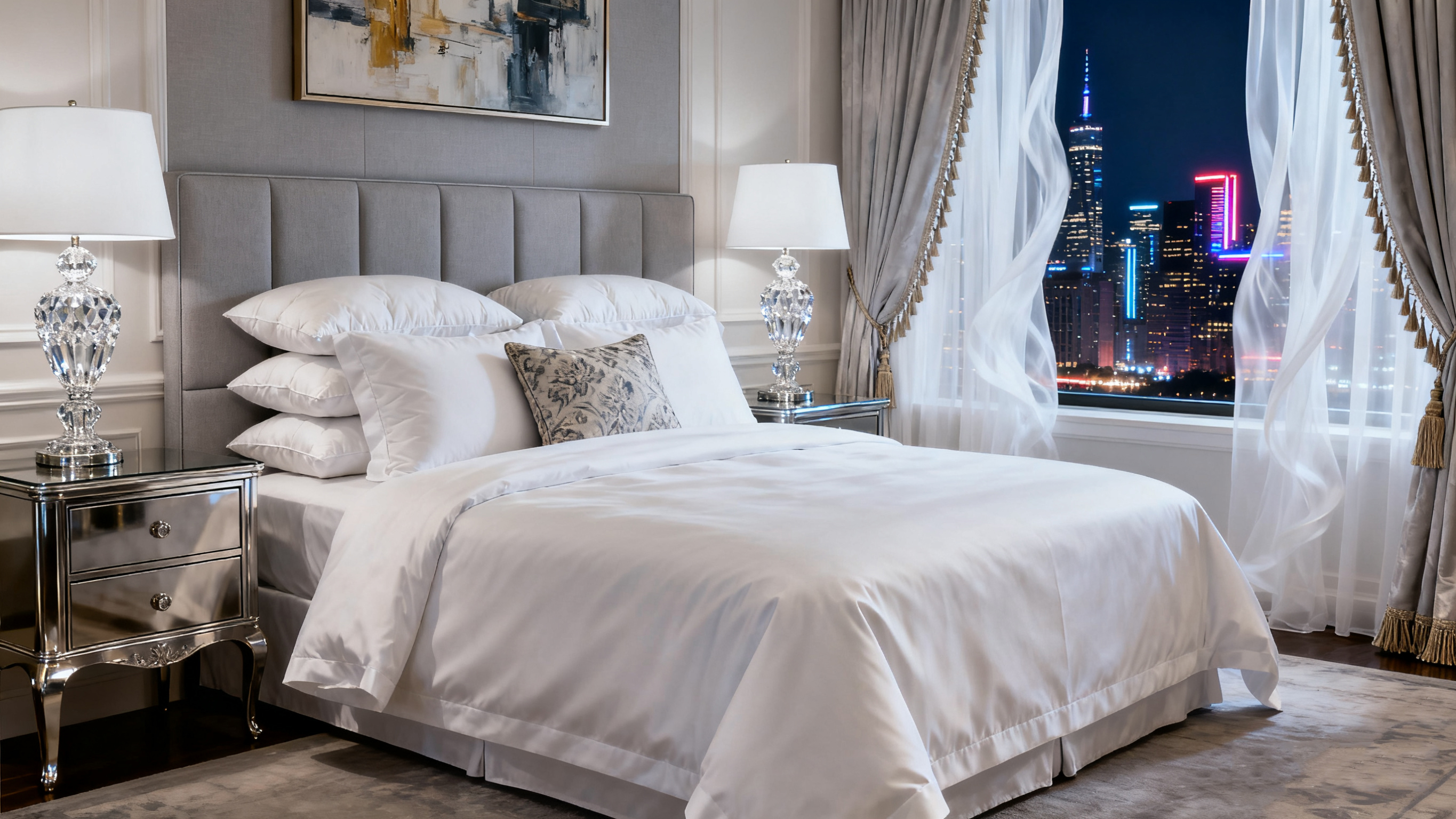
Hotel bedding needs to withstand industrial washing yet remain as new as ever. The following professional techniques can help you achieve a similar result at home:
Washing frequency: The pillowcase should be washed every week, the bed sheet every 1-2 weeks, and the quilt cover once a month. Frequent washing will shorten the lifespan.
Color separation washing: Even if all the items are white, bedding should be washed separately from other clothes to reduce friction and tangling.
Mild cycle: Use the gentle cycle function of the washing machine and keep the water temperature below 40°C. High temperatures can damage the strength of cotton fibers.
**Detergent selection**: Use a neutral detergent. Avoid using bleach and fabric softener. Bleach can discolor white fabrics, while fabric softener forms a film on the surface of the fibers, affecting their breathability.
Loading capacity: The washing machine should not exceed 70% of its capacity. Ensure there is sufficient space for the water to flow and rinse thoroughly.
Drying tips: Tumble dry on low heat or allow to air dry naturally. Remove and smooth out any wrinkles before complete drying to avoid over-drying.
Store wisely: After complete drying, store in breathable cotton bags instead of plastic containers. Use lavender sachets to repel insects, rather than camphor balls.
Seasonal rotation: Optimal comfort throughout the year
Just like in a hotel, adjust the bedding configuration according to the season:
Spring/Fall: Pure cotton gauze offers an ideal balance, being both breathable and warm.
Summer: Consider linen or cotton-linen blends, which offer excellent breathability. The percale weave is also cooler than the satin weave.
Winter: Flannel or brushed cotton provides additional warmth. Consider adding layers of blankets rather than thick duvets.
ReviewsNumber of comments: {{ page.total }}
I want to comment?
{{item.nickname ? (item.nickname.slice(0, 2) + '*****') : item.source === 1 ? 'mall buyer' : '--'}}
{{item.comment_time}}
Review in the {{item.country}}
Reviews
Merchant
{{replyItem.nickname ? (replyItem.nickname.slice(0, 2) + '*****') : replyItem.source === 1 ? 'mall buyer' : '--'}}
{{replyItem.parent_nickname ? (replyItem.parent_nickname.slice(0, 2) + '*****') : '--'}}
{{replyItem.is_merchant_reply === 1 ? replyItem.reply_time : replyItem.comment_time}}
Review in the {{replyItem.country}}
Reviews

No customer reviews
If you have more questions, write to us
Just leave your email or phone number in the contact form so we can send you a free quote for our wide range of designs!
Recommended
2023
01
11
We manufacture an extensive range of Premium and Luxury Bed linen, Bath linen, towels, Bed Sheets, mattress, pillows, and Hospital Linen products that are perfectly designed for the hospitality and hospital industry.
Telephone: 0771-5585836
Email: hanbiyan1@gmail.com
Phone: +86 15878178593
WhatsApp: +86 15878178593
WeChat: 15878178593
Address: Shop No. 201, 2nd Floor, Building 17, Nanning Country Garden Times City, No. 496 Kunlun Avenue, Santang Town, Xingning District, Nanning City, Guangxi Zhuang Autonomous Region
Copyright © 2026 HANBI - www.hanbi-hotelsupplies.com | Sitemap Privacy Policy