





Hotel linen has always been one of the keys to the attention of the hotel, can help the hotel better service to increase passenger flow, so how to choose a good hotel linen has become the focus of the hotel, today let us understand the hotel bed from the fabric, let us in the selection of more appropriate hotel development, cost savings at the same time to increase our benefits
×
From the hotel fabric plain, satin, jacquard to select hotel room linen, let's take a look!
2024-06-06
LINEN AS THE CORS PRODUCT OF THE hotel Has always played an important role in the hotel.
It generally refers to the modern hotel with "cloth" related things. For example: hotel room cloth (bed sheet, quilt cover,
pillowcase) core (quilt core, pillow core), towel (face towel, bath towel, floor towel) and so on.
In fact, the word "linen" is translated from the English linen, which originally means linen, linen. In the past, the business
of processing animal fur into clothing was called "fur", and cloth is a daily necessities woven with cloth as raw materials,
and is purchased by the hotel in large quantities, naturally commonly known as "cloth grass". It is said that the name cloth
was first translated by a British person and was first used in Hong Kong, and then gradually spread in mainland hotels.
Hotel linen is the hotel supplies that are in close contact with guests. High-quality linen products can not only bring comfortable
accommodation experience to guests, but also increase the guest's praise rate and the possibility of restaying.
In 2010 promulgated by the National Tourism Administration of the "tourism hotel star classification and evaluation (GB/T14308-2010)"
also put forward the hotel linen to meet the "product comfort" principle, but also clear the specific score of the standards of linen.
SO TO CHOOSE A GOOD HOTEL LINEN WHAT INDICATORS DO YOU NEED TO
SEE?
FIRST :FABRIC MATERIAL
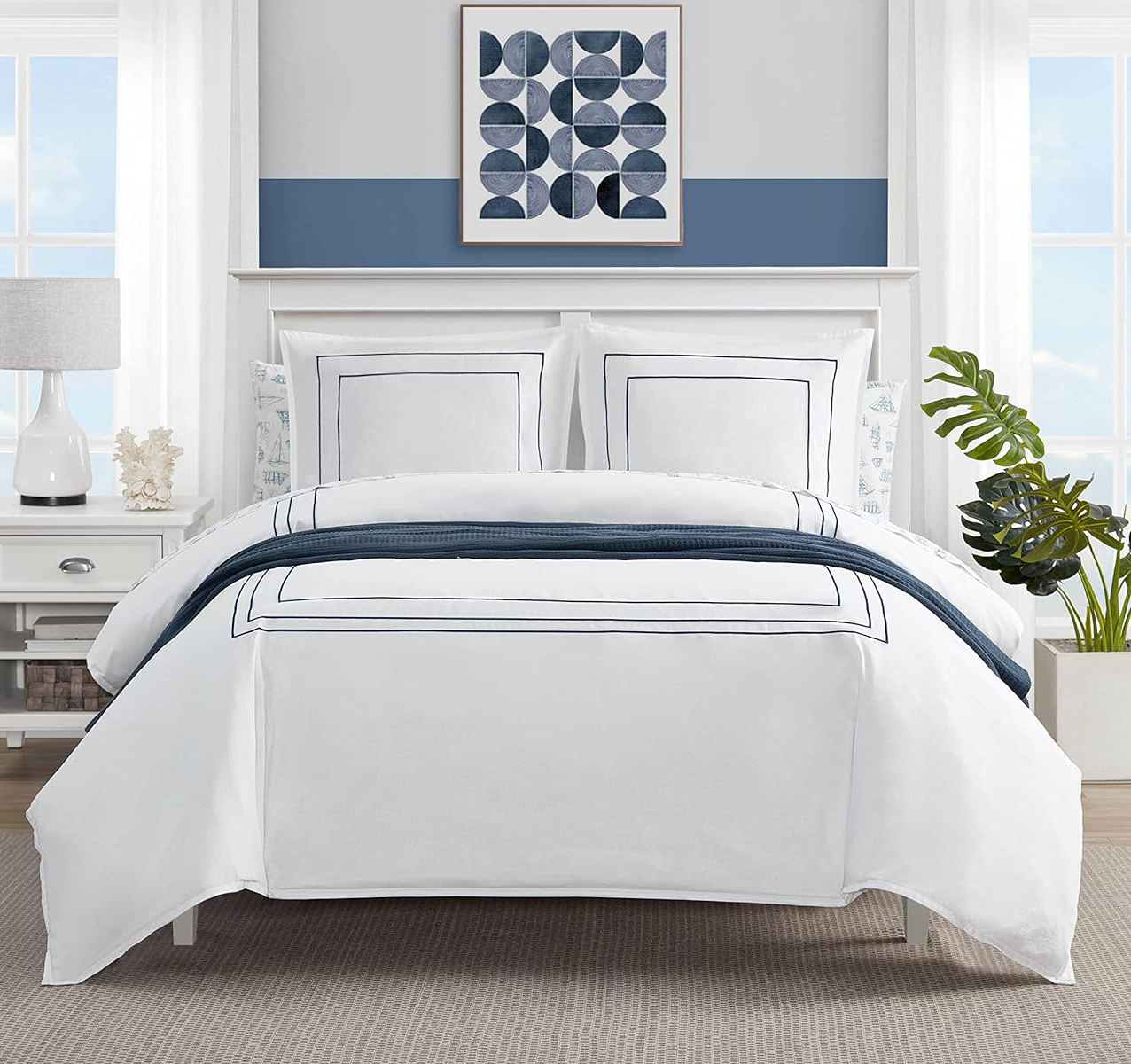
Modern hotel linen raw materials, most of which are based on cotton. Therefore, the quality of cotton fundamentally determines the
quality of the fabric. According to the distinction of fiber length, cotton can be roughly divided into three kinds: long cashmere cotton,
fine cashmere cotton and coarse cashmere cotton.
1. Long staple cotton
The finest cotton. Also known as sea Island cotton, native to South America. Fiber length, high strength, strong water absorption,
showing silk luster, fiber length is generally greater than 33mm, and even can reach 60-70mm.
2. Fine lint cotton
The most common cotton. Also called upland cotton, native to Central America. It accounts for 85% of the world's total cotton production
and 98% of China's total cotton production. At present, most affordable cotton fabrics use fine cashmere cotton, cotton fiber length 23 ~ 33mm.
3,COARSE CASHMERE COTTON
The obsolete cotton. Also called Asian cotton, native to India. Low yield, short fiber, not suitable for machine textile, cotton fiber length is less
than 23mm.
In summary, the coarse cotton fiber is too coarse to be used for machine textile, so only long staple cotton and fine staple cotton are generally
used in cotton textile. The long-staple cotton is the best of these cotton, long fiber, high strength, strong water absorption.
SECOND THE PRODUCTION PROCESS
In addition to raw materials, the process also has a great impact on the quality of linen. Generally, we need to pay attention to the yarn density
that is, the thickness of the yarn, the density of the fabric and the weaving method of these three aspects.
1. YARN COUNT
Bedding is made of cloth, so the first is spinning, yarn belongs to the category of "spinning", yarn is the most basic unit of the finished fabric
indicating that a certain amount of cotton can weave the number of yarn (count), is also an important indicator to determine the softness of
fabric, gloss and so on.
It is generally divided into: thick yarn (below 18s), medium yarn (19s~29s), fine yarn (30s~60s), super fine yarn (60s).
The smaller the number of yarn counts, the thicker the yarn, the larger the number, the thinner the yarn, the thinner the woven fabric, the
softer the feel and the better the gloss.
In addition, the critical value of fine yarn and super-fine yarn is 60s, so 60s can be regarded as an important reference index. The fabric woven
with 60s yarn has good luster, moderate thickness, fastness and comfort, as well as winter and summer body feeling, which is a reasonable
choice for hotels.
2. DENSITY
Density represents the number of warp and weft yarns, and it and the way the yarn is organized belong to the category of "weaving". For
example, 133 warp threads, 72 weft threads, the density is 133*72.
Generally speaking, a reasonable allocation of warp and weft density should meet two requirements.
First, the strength of the warp and weft of the fabric should be close. In the case of the same organization, the fabric tightness of different
yarn counts should be close. Therefore, as the yarn count increases, the density will increase accordingly, such as 40s*40s/140*120 and
60s*40s /173*120.
Second, the total fabric tightness should take into account the fastness and feel of the fabric, which is in line with the reasonable proportion
of various yarn counts and density commonly used by the hotel.
The density explains how much material is used in the cloth, which is the most important indicator to describe the quality of the cloth, so the
quality of the bed under the premise of the same number of beds is the most important to see the density, the higher the density, the more
dense the cloth, the heavier the weight.
3. WEAVING METHOD
Weaving method, also known as fabric structure, refers to the method of interweaving warp and weft yarn, which is an important index
affecting the softness and gloss of fabrics.
Generally, the hotel fabrics used more are plain, satin, jacquard three kinds of organization.
Plain: the warp and weft are interwoven every other yarn. Interweaving points more, the texture is firm, the surface is flat, the appearance
of the same front and back, so the density can not be too high, relatively thin, good wear resistance, good air permeability, the price is
relatively low. However, there are a few plain fabrics that are more expensive, such as some high-grade embroidered fabrics.
Twill: The warp and weft should be interwoven at least two threads apart. Twill cloth is relatively thick, feel soft, there are positive and negative
points, the three-dimensional sense of organization is relatively stronger than plain cloth, and the cost is higher.
Satin weaving: The manufacturing process is more complex, the warp and weft yarn is interwoven at least three times, the tissue interweaving
point is less, the texture is soft, the luster is better, it is the highest density and the thickest fabric, but the product cost is higher, so the price
will be relatively expensive.
Jacquard organization: divided into small jacquard, large jacquard, fine yarn, very high requirements for raw materials, the cost will be relatively
high, but strong decorative, drdrability and good air permeability, high color fastness, can meet the hotel's individual needs.
THREE LINEN SPECIFICATIONS
Usually hotel linen includes five sets and seven sets of two specifications. The five-piece set contains bed sheet, duvet cover, pillowcase,
comforter core and pillow core, and the seven-piece set contains bed sheet, duvet cover, pillowcase *2, pillow core *2 and quilt core. In addition
some hotels will purchase more complete linen packages, such as eight-piece sets for bed sheets, duvet covers, pillowcases *2, pillow core *2
quilt core, protective pads.
Through the survey found that the vast majority of hotels to purchase linen choose seven-piece sets, jet satin, warp and weft fabric. If the cotton
fabric, the yarn structure is 60s*80s/200* (92+92), strong skin affinity; If the cvc8020 fabric is selected, the yarn support structure is 60s*40s/
173x120 and 40s*40s/145*105, which can meet the strong skin affinity and better washable resistance. The towel products choose to use all
cotton, the process is long hair spiral, this kind of feel comfortable, good water absorption.
Of course, for the hotel, the suitable is the real good cloth. Fabric texture, workmanship, washing loss, hotel replacement cycles and funds
must all be taken into account.
ReviewsNumber of comments: {{ page.total }}
I want to comment?
{{item.nickname ? (item.nickname.slice(0, 2) + '*****') : item.source === 1 ? 'mall buyer' : '--'}}
{{item.comment_time}}
Review in the {{item.country}}
Reviews
Merchant
{{replyItem.nickname ? (replyItem.nickname.slice(0, 2) + '*****') : replyItem.source === 1 ? 'mall buyer' : '--'}}
{{replyItem.parent_nickname ? (replyItem.parent_nickname.slice(0, 2) + '*****') : '--'}}
{{replyItem.is_merchant_reply === 1 ? replyItem.reply_time : replyItem.comment_time}}
Review in the {{replyItem.country}}
Reviews

No customer reviews
If you have more questions, write to us
Just leave your email or phone number in the contact form so we can send you a free quote for our wide range of designs!
Recommended
2023
01
11
We manufacture an extensive range of Premium and Luxury Bed linen, Bath linen, towels, Bed Sheets, mattress, pillows, and Hospital Linen products that are perfectly designed for the hospitality and hospital industry.
Telephone: 0771-5585836
Email: hanbiyan1@gmail.com
Phone: +86 15878178593
WhatsApp: +86 15878178593
WeChat: 15878178593
Address: Shop No. 201, 2nd Floor, Building 17, Nanning Country Garden Times City, No. 496 Kunlun Avenue, Santang Town, Xingning District, Nanning City, Guangxi Zhuang Autonomous Region
Copyright © 2026 HANBI - www.hanbi-hotelsupplies.com | Sitemap Privacy Policy