





Hanbi focus on the development of environmentally friendly disposable products. The company has 20 patented technologies and an annual production capacity of 100 million sets. The main products include straw toothbrush, PLA comb and other degradable toiletry sets, with a degradation rate of more than 90%. Passed ISO9001 and ISO14001 certification, serving more than 500 customers. Hampe is committed to providing green solutions for the hotel industry, reducing plastic use by 300 tons per year.
×
Hotel Bed Black Tech: How can AI algorithms save you $28,000 / year?
2025-04-11
Hotel Bed Black Tech: How can AI algorithms save you $28,000 / year?
From material innovation to smart decision-making, uncovering the hotel industry's "sleep economy" revolution
Introduction: The hidden cost crisis of traditional hotel bedding
In hotel operations, bedding seems to be a basic consumable, but it actually hides a huge cost black hole. According to statistics, a hotel with 200 rooms has an annual
hidden loss of up to 52,000 due to bed loss, low washing efficiency, and poor customer reviews.
Now, the intervention of algorithms is transforming this problem into a profit growth point - through intelligent material selection, dynamic inventory management, washing
optimization, the three core black technologies, the hotel can save 52,000 yuan a year. Now, the intervention of AI algorithms is transforming this problem into a profit
growth point - through * * intelligent material selection, dynamic inventory management, washing optimization, the three core black technologies, the hotel can save 28,000
operating costs per year, while increasing the customer re-purchase rate of more than 40%.
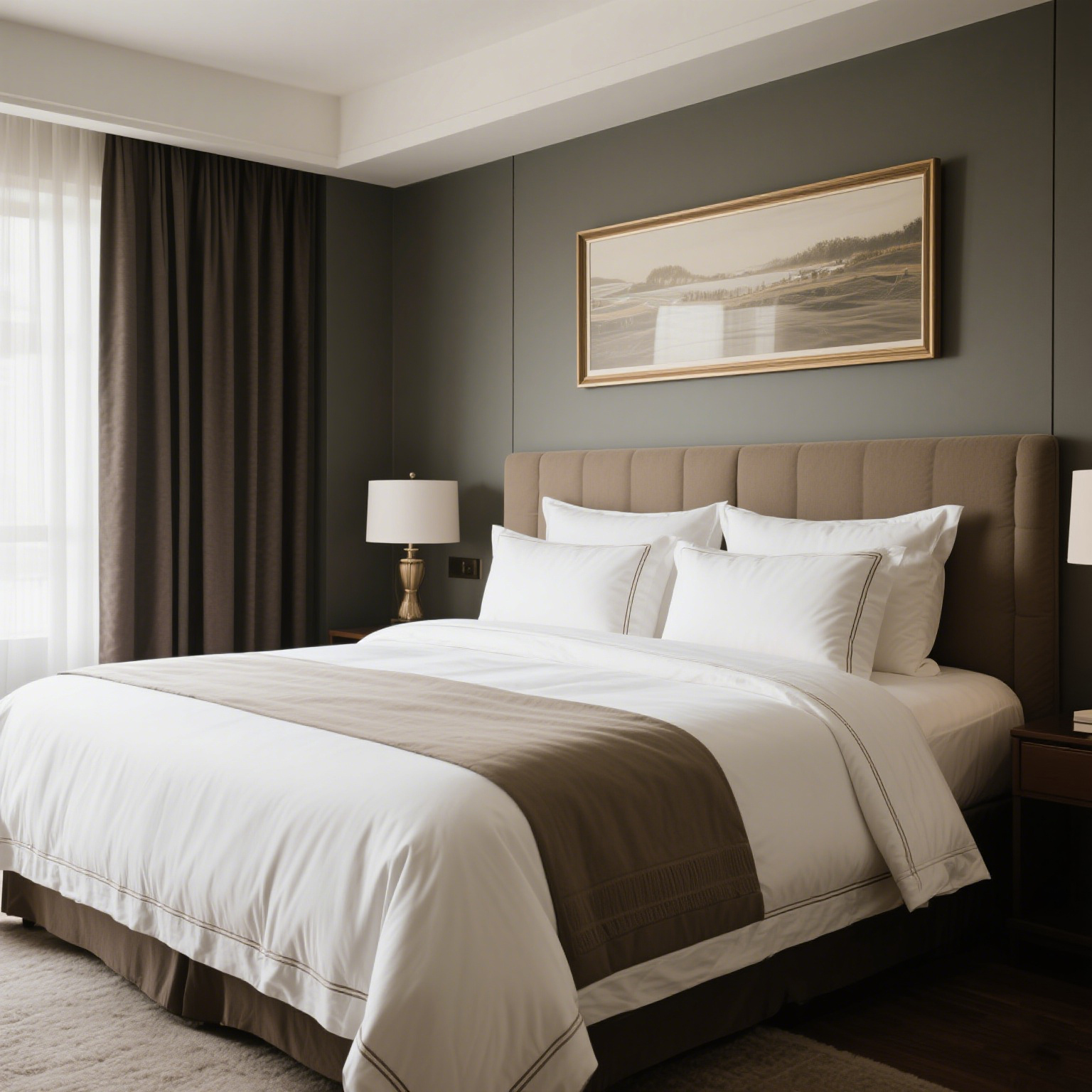
AI material selection: The revolution from "experience procurement" to "data decision-making"
Traditional hotel procurement relies on manual experience, easy to fall into the "high cost ≠ high experience" misunderstanding. AI algorithm achieves accurate material selection
through deep learning of global 1000+ high-end hotel bed data:
Material matching:
Analyze the preferences of the target group (e.g., business customers prefer the naked sleeping touch of 60S long staple cotton, vacationers prefer the drapping feel of Tencel ™ blend),
and recommend the best material combination.
Dynamically optimize blend ratios (such as cotton + Tencel ™ ratio) to balance cost and experience. A hotel chain has reduced the cost of a single piece of bed by 18% and the
negative rating by 52% through AI solutions.
Process prediction:
Simulate the fabric strength attenuation curve after 300 times of machine washing, and automatically generate the reinforcement sewing scheme (such as three stitches and five
threads wrapping density, needle distance parameters).
Anticipating regional climate impacts: Southeast Asian hotels prefer mildew and antibacterial technology, while Middle Eastern customers prefer high-density sand and dust protection.
Second, intelligent inventory: from "blind stockpiling" to "dynamic warehouse adjustment"
Due to extensive inventory management, traditional hotels often suffer double losses of out of stock in peak season and overstocking in off-season. AI algorithms achieve cost
optimization through the following strategies:
Demand forecast:
Integrate historical occupancy, seasonal fluctuations, and local event (e.g., trade show/event) data to generate purchase lists 90 days in advance with 92% accuracy.
Case: After a business hotel in Shanghai connected to the AI system, the purchase volume of bed products was reduced by 23%, and the out-of-stock rate was zero.
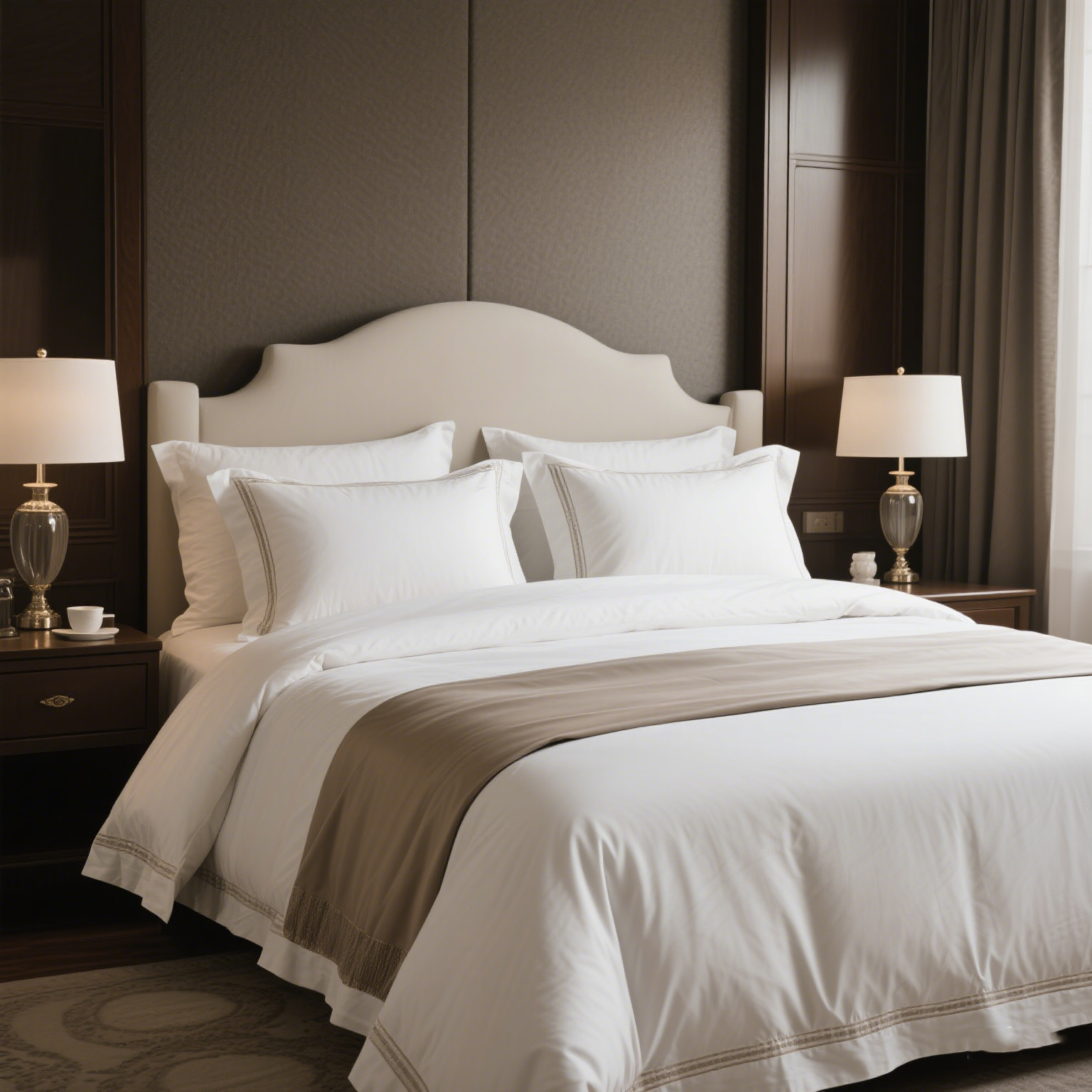
Global Supply chain collaboration:
Real-time tracking of 500+ supplier price, logistics time, capacity data, automatically match the optimal order mix.
Dynamic warehouse transfer: The unsalable inventory in Southeast Asia during the rainy season is intelligently deployed to newly opened hotels in the Middle East,
reducing storage costs by 34%.
Secondary utilization of defective products:
Based on image recognition technology, it can automatically classify slightly defective products (such as uneven dyeing) and transform them into staff dormitories or
promotional gifts, reducing the reported loss rate by 68%.
Third, washing optimization: from "fixed frequency" to "on-demand cleaning"
The cost of bed washing accounts for 45% of the total expenditure of hotel linen, and the AI algorithm achieves scientific cost reduction through accurate monitoring:
Stain Recognition System:
The bed is implanted with NFC chip (high temperature resistant version) to record the stain type and area data after each use.
Classified cleaning strategy: Only perspiration stained sheets enable "quick energy saving washing", oil stains start deep cleaning procedures, water and electricity
consumption reduced by 27%.
Life warning:
According to fabric wear, washing times, PH value fluctuations, predict the remaining life of the bed to avoid premature elimination.
Experimental data: Under AI management, the average use cycle of bed products is extended to 320 times, which is 19% higher than that of manual management.
Environmental Compliance:
Automatic generation of detergent usage reports to ensure compliance with local environmental regulations (such as EU REACH standards) and zero risk of fines.
4. Practical case: How does AI make a hotel save $28,000 a year?
Take a 200-room resort in Bali:
Cost structure optimization:
AI material selection reduces the purchase price 1.2/ set, the annual purchase volume of 8,000 sets → save 1.2/ set, the annual purchase volume of 8,000 sets → save 9,600
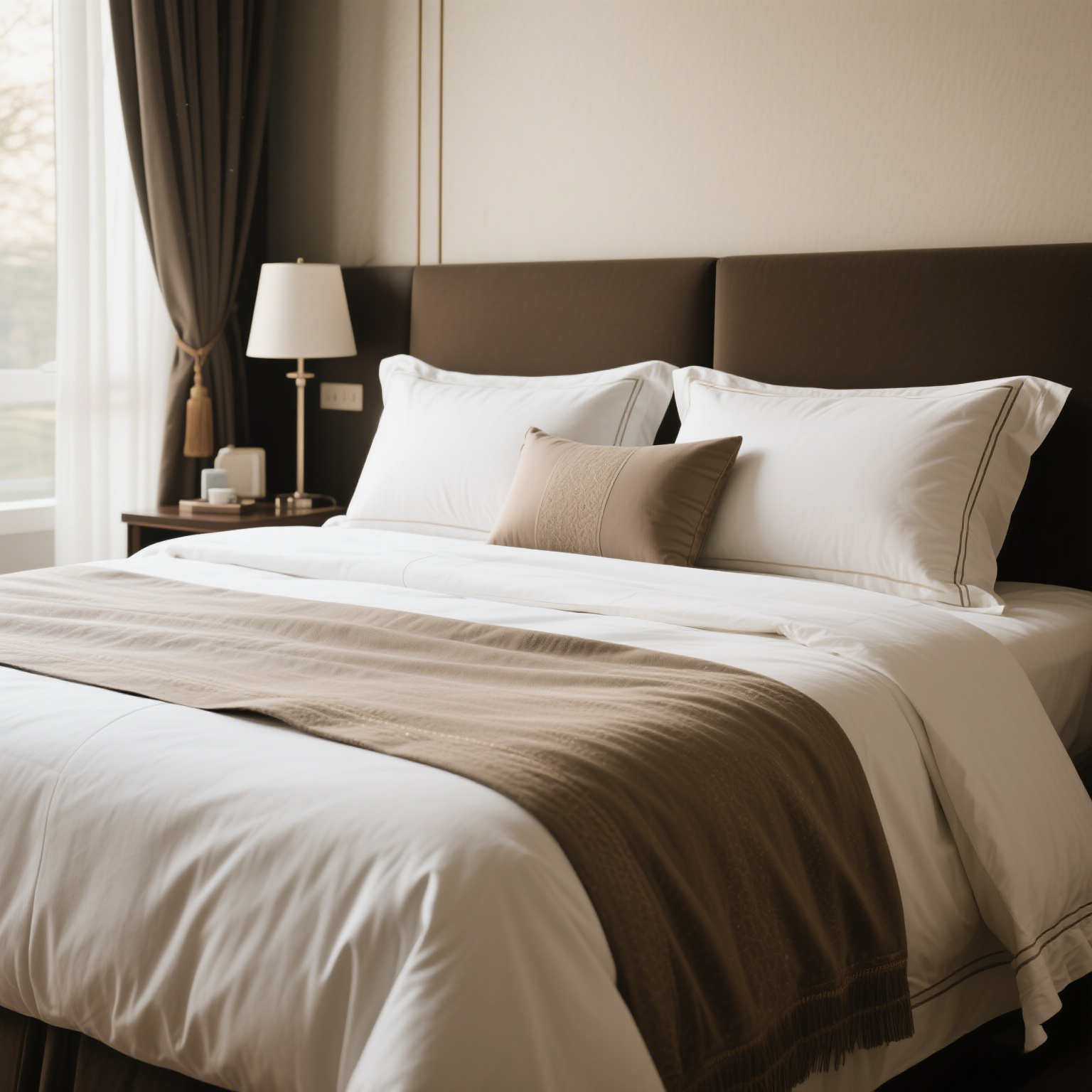
2.3x increase in inventory turnover → $4,200 reduction in warehousing costs
Reduced washing energy + longer life → $7,300 savings in maintenance costs
Revenue growth:
Negative rating decreased from 12% to 3%→OTA rating increased to 4.8 stars and occupancy increased by 15% ($6,900)
Total benefit: $28,000 / year
Fifth, the future trend: the three major upgrade directions of AI bedding system
Meta-universe Experience Test:
Customers VR test bed of different materials, data feedback to the procurement system.
Blockchain traceability:
Transparency of the whole link from cotton planting to finished products, enhancing the trust of high-end customers.
Carbon neutral calculation:
Automatically generate bed carbon footprint reports to help hotels meet ESG targets.
Conclusion: Seize the hotel industry's "number intelligent sleep" dividend AI algorithm is redefining the value logic of hotel bedding - it is not only the standard room,
but also become a cost control engine, customer experience fulcrum, brand premium carrier. For procurement decision makers, access to AI systems is not a cost, but a
strategic investment with high returns.
ReviewsNumber of comments: {{ page.total }}
I want to comment?
{{item.nickname ? (item.nickname.slice(0, 2) + '*****') : item.source === 1 ? 'mall buyer' : '--'}}
{{item.comment_time}}
Review in the {{item.country}}
Reviews
Merchant
{{replyItem.nickname ? (replyItem.nickname.slice(0, 2) + '*****') : replyItem.source === 1 ? 'mall buyer' : '--'}}
{{replyItem.parent_nickname ? (replyItem.parent_nickname.slice(0, 2) + '*****') : '--'}}
{{replyItem.is_merchant_reply === 1 ? replyItem.reply_time : replyItem.comment_time}}
Review in the {{replyItem.country}}
Reviews

No customer reviews
If you have more questions, write to us
Just leave your email or phone number in the contact form so we can send you a free quote for our wide range of designs!
Recommended
2023
01
11
We manufacture an extensive range of Premium and Luxury Bed linen, Bath linen, towels, Bed Sheets, mattress, pillows, and Hospital Linen products that are perfectly designed for the hospitality and hospital industry.
Telephone: 0771-5585836
Email: hanbiyan1@gmail.com
Phone: +86 15878178593
WhatsApp: +86 15878178593
WeChat: 15878178593
Address: Shop No. 201, 2nd Floor, Building 17, Nanning Country Garden Times City, No. 496 Kunlun Avenue, Santang Town, Xingning District, Nanning City, Guangxi Zhuang Autonomous Region
Copyright © 2026 HANBI - www.hanbi-hotelsupplies.com | Sitemap Privacy Policy