





Since the early stage of development, hanbi has integrated its service knowledge and concepts accumulated in the hotel industry into the company's management, deeply understood the high requirements of high-end hotels for quality and style, and always pursued high quality products and design innovation. In the past 20 years, hanbi has served high-star hotels in more than 130 countries. We all pursue the exquisite quality of the hotel, and experience the Korean won products now, and start to enjoy the quality of life higher than the star hotel
×
Hotel Slippers Guide: Creating a Comfortable Experience for Guests
2025-01-17
One: Material consideration
EVA material
Comfort: EVA (ethylene-vinyl acetate copolymer) is a quality material commonly used in hotel slippers. It is soft and elastic,
and when guests wear it, their feet can be well cushioned and supported. This soft touch is like stepping on a soft sponge,
which can effectively reduce foot fatigue, especially for guests who walk around the room for a long time.
Durability and water resistance: EVA slippers have good durability and are not easy to break. Even after many wearing and
bending, it can still maintain its shape and performance. At the same time, its waterproof performance is excellent, and guests
can effectively prevent water penetration and keep their feet dry when wearing it in and out of the bathroom.
Non-woven material
Lightweight: non-woven slippers are very lightweight, and guests can hardly feel the weight. This is a good choice for those who
pay attention to walking light sense of guests, such as the elderly or mobile guests, they will feel more relaxed when wearing this
slippers.
Permeability: non-woven fabrics have a certain degree of permeability, which can let the hot air and moisture of the feet out. However,
in terms of water resistance, non-woven slippers are relatively weak and not suitable for long-term use in humid environments such as
bathrooms.
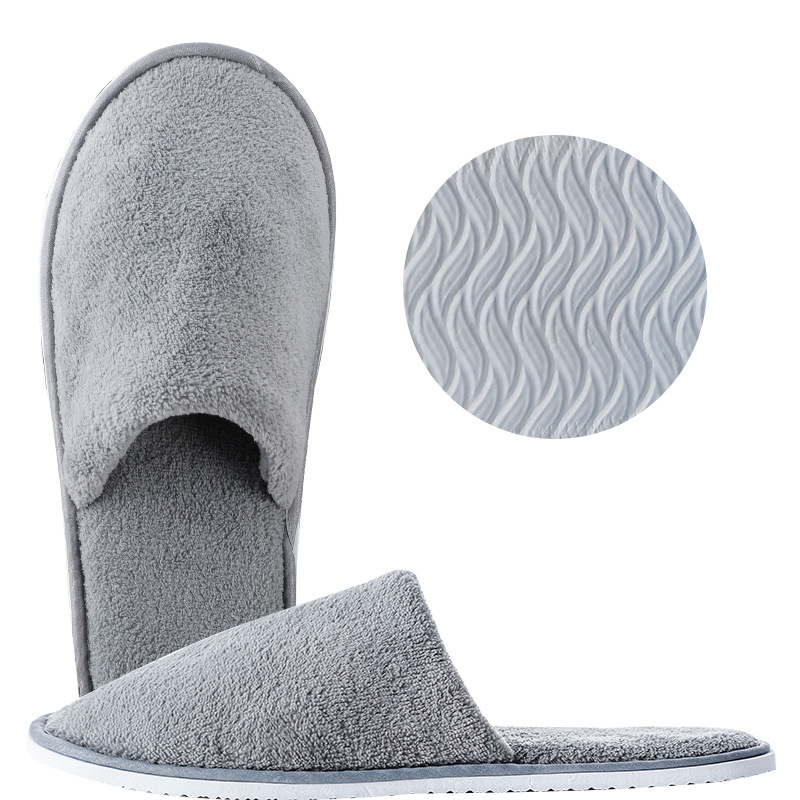
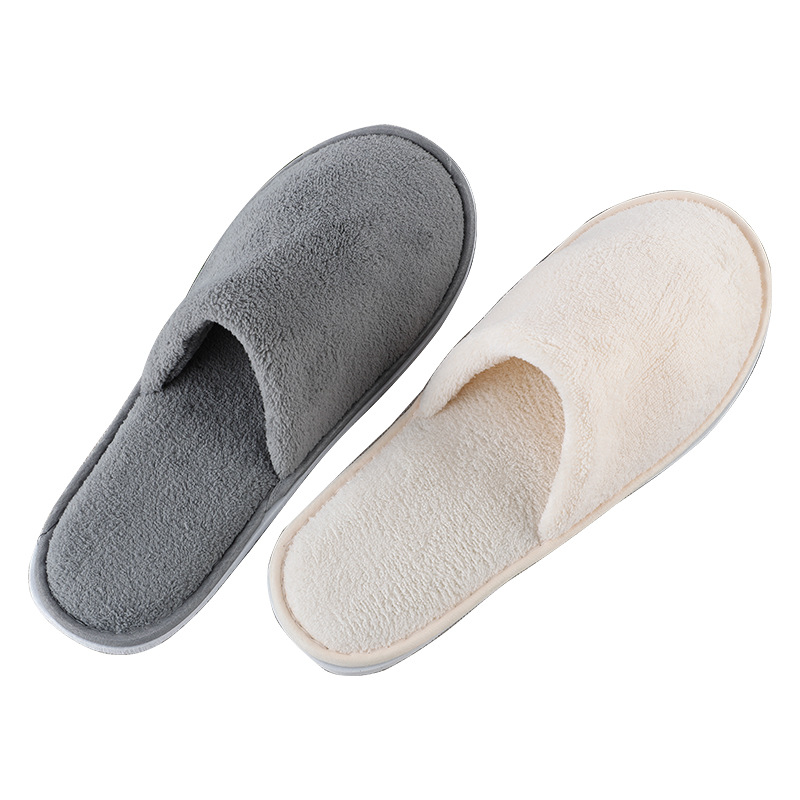
Terry cloth material
Hygroscopicity and softness: The biggest feature of terrycloth slippers is their strong hygroscopicity. If guests have sweaty feet or come
out of the bathroom with water on their feet, terrycloth slippers can quickly absorb moisture and keep feet dry. And its surface is usually
soft, as if it is wrapped in a towel, giving guests a comfortable touch.
Cleaning and maintenance: However, terrycloth slippers are relatively difficult to clean and dry, and easy to breed bacteria. If you choose
this material, the hotel needs to pay attention to the cleaning and disinfection frequency of slippers.
Two: comfort assessment
Sole design
Non-slip: Non-slip is the key to the design of hotel slippers soles. The sole should have clear and deep anti-slip lines, so that guests can
effectively prevent slipping when walking on smooth surfaces such as the hotel's tile floor and bathroom floor. Slippers can be selected by
testing their anti-slip effect on a wet simulated ground.
Thickness and elasticity: The thickness and elasticity of the sole can also affect comfort. The right thickness of the sole can provide sufficient
cushioning and reduce the pressure on the foot. Generally speaking, the thickness of about 0.5-1 cm is more appropriate. The elasticity of
the soles is better, and when the guests walk, they can feel the bounce of the soles, just like there is a small help to make walking easier.
Shoe type and size
Ergonomic: The shoe type of slippers should be ergonomic and can fit the foot well. The toe should have enough space to allow the toes to
extend freely without feeling squeezed. The heel part of the shoe should be able to stably wrap the heel to prevent the slippers from falling
off during walking.
Full range of sizes: The hotel should provide slippers in a variety of sizes to meet the needs of different guests. Generally, there should be
at least small, medium and three sizes, and the size identification should be clear for guests to choose.
Three: Appearance and hygiene
Color and style
Aesthetics: the color and style of the hotel slippers should match the overall style of the hotel. If the hotel is a high-end luxury type, you can
choose elegant color, exquisite style slippers, such as solid color EVA slippers, with the hotel's logo, highlight the quality. If it is a theme hotel,
the style of slippers can be designed according to the theme to add interest.
Easy to clean: from the point of view of cleaning, light-colored slippers are easier to find stains, easy to clean in time. But light-colored slippers
can get dirty easily and need to be cleaned more frequently. Dark slippers are relatively stain resistant, but stains are not easy to spot.
Three: health factors
Easy to eliminate toxicity: When choosing hotel slippers, it is necessary to consider whether they are easy to disinfect. Slippers made of EVA
and non-woven fabrics are relatively easier to disinfect, such as ultraviolet disinfection and high-temperature disinfection. Terrycloth slippers
may require more complex disinfection procedures, such as the need to soak with a special disinfectant.
Packaging and hygiene: The packaging of slippers is also important. It is best to use independent packaging to ensure the hygiene of slippers
before they are not used. Packaging should have clear product information, including material, size, instructions for use.
ReviewsNumber of comments: {{ page.total }}
I want to comment?
{{item.nickname ? (item.nickname.slice(0, 2) + '*****') : item.source === 1 ? 'mall buyer' : '--'}}
{{item.comment_time}}
Review in the {{item.country}}
Reviews
Merchant
{{replyItem.nickname ? (replyItem.nickname.slice(0, 2) + '*****') : replyItem.source === 1 ? 'mall buyer' : '--'}}
{{replyItem.parent_nickname ? (replyItem.parent_nickname.slice(0, 2) + '*****') : '--'}}
{{replyItem.is_merchant_reply === 1 ? replyItem.reply_time : replyItem.comment_time}}
Review in the {{replyItem.country}}
Reviews

No customer reviews
If you have more questions, write to us
Just leave your email or phone number in the contact form so we can send you a free quote for our wide range of designs!
Recommended
2023
01
11
We manufacture an extensive range of Premium and Luxury Bed linen, Bath linen, towels, Bed Sheets, mattress, pillows, and Hospital Linen products that are perfectly designed for the hospitality and hospital industry.
Telephone: 0771-5585836
Email: hanbiyan1@gmail.com
Phone: +86 15878178593
WhatsApp: +86 15878178593
WeChat: 15878178593
Address: Shop No. 201, 2nd Floor, Building 17, Nanning Country Garden Times City, No. 496 Kunlun Avenue, Santang Town, Xingning District, Nanning City, Guangxi Zhuang Autonomous Region
Copyright © 2026 HANBI - www.hanbi-hotelsupplies.com | Sitemap Privacy Policy