





Weaving and Dyeing Art: The Craft Secrets Behind Hotel Bedding
Weaving and Dyeing Art: The Craft Secrets Behind Hotel Bedding
When we are enjoying the comfortable experience of hotel bedding, we seldom consider the complexity of the craftsmanship behind it. From the cotton fields to the bedroom, the creation of a high-quality hotel bedding set is a delicate dance of weaving and dyeing. This article will take you deep into the world of guanfa weaving and reactive dyeing, revealing how these techniques work together to create sleep.
Kongdan weaving: The mathematical beauty of interwoven warp and weft
Sateen Weave is a variant of the satin weaving technique, renowned for its unique smooth surface and soft luster. Unlike the common plain weave or twill weave, the characteristic of satin weaving is that each weft thread floats over 4 or more warp threads (or vice versa), and then passes through one warp thread below.
This weaving technique creates longer "floating threads", reducing the number of yarn intersections, thereby forming an exceptionally smooth surface. In standard guernsey weaving, the floating threads typically cover 4 to 7 strands of yarn in opposite directions, with a ratio of approximately 4:1 to 7:1. This means that 75% to 85% of the yarn is exposed on the surface, directly determining the feel and appearance of the fabric.
Jet loom technology is the key to modern satin fabric production. Unlike traditional looms, jet looms use high-speed air currents to guide the weft threads through the warp threads. The speed of weft insertion can reach 1,200 times per minute, which is 3-4 times faster than traditional looms. This high-speed weaving not only improves efficiency but also ensures more uniform tension control, which is crucial for the consistency of quality in high-count and high-density fabrics.
The jet loom can also weave wider fabrics (up to 3.5 meters), reducing the need for seams in bed sheets and pillowcases. The seamless or minimally-sewn design is not only aesthetically pleasing but also enhances comfort and durability.
Active dyeing: Molecular-level bonding of color and fiber
Reactive Dyeing is a distinctive process for high-end hotel bedding. It is fundamentally different from ordinary pigment dyeing. Reactive dyes do not simply adhere to the surface of the fibers; instead, they form covalent bonds with the molecular structure of cotton fibers, truly becoming an integral part of the fibers.
This process involves several precise steps:
Pre-treatment: The raw fabric is first subjected to scouring and bleaching to remove the natural impurities (waxes, pectins, pigments) from the cotton fibers, ensuring uniform dyeing. This process requires precise control of temperature and time. Excessive treatment will damage the fiber strength, while insufficient treatment will affect the dyeing effect.
Dyeing: Reactive dyes undergo a chemical reaction with the fibers under alkaline conditions. Key parameters such as dye concentration, temperature, pH value, and time need to be precisely controlled. Hotel-grade bedding usually employs the immersion dyeing process rather than the rubbing dyeing process, ensuring that the dyes fully penetrate into each fiber rather than remaining only on the surface.
Fastness to color: After dyeing, a heat steam treatment is applied to fully form the covalent bonds between the dye and the fibers. This process determines the key factor for color fastness. High-quality reactive dyeing can withstand more than 50 washes without significant color fading.
Post-processing: This includes softening treatment, shrinkage prevention treatment, etc., which further enhances the hand feel and dimensional stability.
Compared with ordinary pigment printing and dyeing, the advantages of reactive printing and dyeing are obvious:
The color vividness has been enhanced by 30% to 40%.
The color fastness against abrasion has been improved by 2-3 levels.
The air permeability remains at 100% (dyeing and printing will clog the fiber gaps)
The texture is softer and more natural.
The art of balancing density and count
High count and high density are the core characteristics of high-quality gongzhan fabric. However, a precise balance is required between count and density. If the count is too high but the density is insufficient, the fabric will be too soft and lack a sense of firmness; if the density is too high but the count is insufficient, the fabric will feel stiff and lose its smoothness.
Hotel-grade brocade is usually made with a ratio of 80 threads per inch and 300 strands or 100 threads per inch and 400 strands. This balance creates:
Anti-wrinkle property: The higher the density, the greater the friction between the yarns, making it less likely for the fabric to shift or wrinkle.
Durability: The high-count and high-density fabric can withstand up to over 20,000 wearings (compared to about 10,000 wearings for ordinary cotton fabric)
Drapeability: The perfect balance of weight and stiffness enables the bed sheet to naturally drape, making the bed-making process more aesthetically pleasing.
Environmental Protection and Sustainability: The Focus of Modern Hotel Industry
Top hotel brands are increasingly paying attention to the environmental footprint of bedding. In this regard, the production of cashmere and the process of reactive dyeing have made significant progress:
Water resource management: The modern closed-loop dyeing system has reduced water consumption from the traditional 100-150 liters per kilogram of fabric to 30-50 liters per kilogram. The wastewater is treated and then recycled.
Energy efficiency: The development of the low-temperature dyeing process has reduced energy consumption by 40% while minimizing damage to the fibers.
Chemical selection: The EU OEKO-TEX standard certification ensures that all dyes and additives do not contain harmful substances, and they can be safely used even by those with allergic constitutions.
Quality Identification: How to Recognize Genuine High-Quality Gongzhan
For consumers, when identifying genuine high-quality Gongzhan, the following points should be noted:
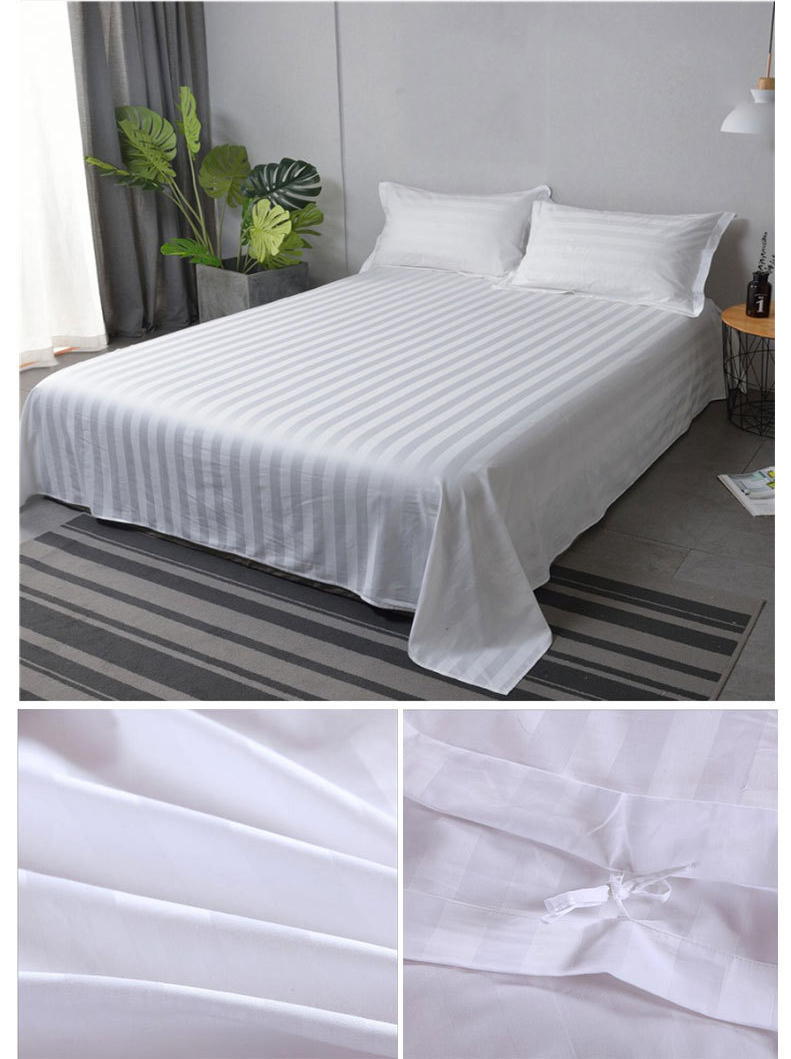
Luster test: The genuine gongzhan fabric has a soft luster resembling that of pearls, showing subtle variations at different angles. Excessive shine may indicate the addition of optical brightening agents.
Touch experience: High-quality brocade should have a cool, smooth but not greasy texture. When firmly grasped and then released, it should quickly return to its original flat state without leaving any obvious creases.
Label information: Check the ingredient label and density indicators (such as "80 pieces 400 threads"), pay attention to the difference between "cotton" and "100% cotton", the latter is the truly pure cotton.
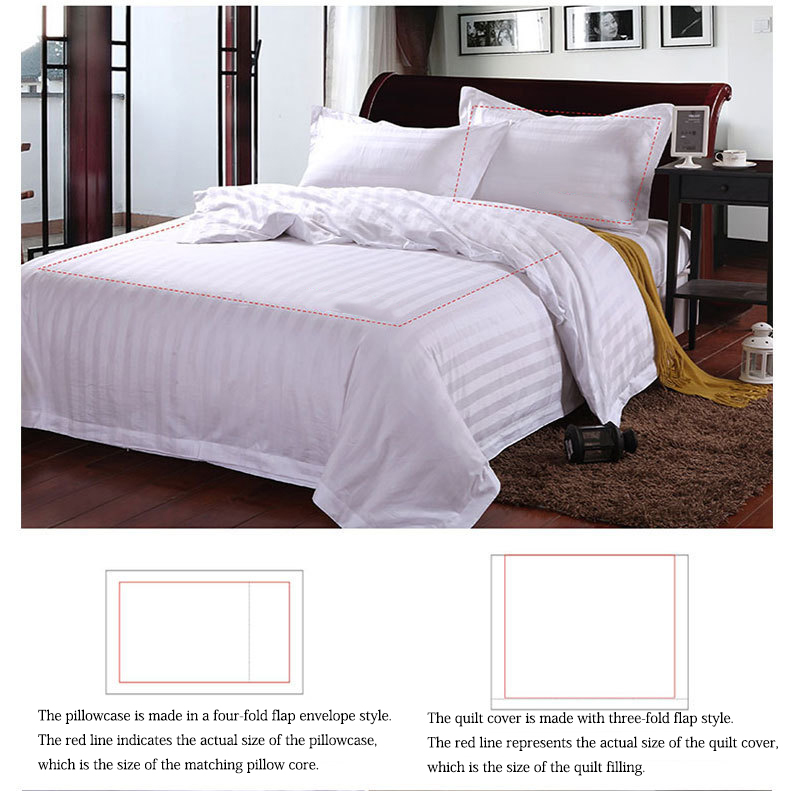
Edge finishing: High-quality bedding should have wide envelope-style pillowcases and reinforced stitching. The quality can be seen in the details.
From Craftsmanship to Experience: How Technology Enhances Sleep Quality
These exquisite techniques ultimately serve a simple yet crucial goal: to improve sleep quality. When we understand the technological investment behind it, we can truly appreciate the comfort experience as we slide into the hotel bed.
