





Hospital Bedding Purchase Guide: Material Selection and Four Core Advantages!
Hospital Bedding Purchase Guide: Material Selection and Four Core Advantages
Why can't hospital bedding be chosen at will?
Hospital bed sheets and covers are different from ordinary household textiles. They carry a crucial medical safety mission. Every day, they come into contact with the skin secretions, body fluids and medical contaminants of different patients. A set of qualified medical bedding must withstand the rigorous tests of high-intensity disinfection and washing, while providing a safe and comfortable rest environment for patients. After undergoing the hospital-standard chlorine bleaching disinfection and high-temperature cleaning, ordinary household textiles often suffer from severe shrinking, fading, deformation and even damage, which not only affects their service life but also may lead to bacterial residue and cross-infection.
The professional aspect of medical bedding lies in its special materials and craftsmanship. The purchasing data from professional medical institutions such as Guangzhou Chest Hospital shows that modern medical bedding generally uses a polyester-cotton blended material (polyester 65% ± 3% + cotton 35% ± 3%), and this ratio has been scientifically verified to achieve the best balance between comfort and durability 14. Unlike home bedding which pursues a wide variety of patterns, medical bedding pays more attention to functional design, such as side-opening strap-style covers and envelope-style pillowcases, etc. These designs make it convenient for medical staff to replace the bedding efficiently when the patient is lying in bed.
2. Polyester-cotton blend: The ideal choice for medical environments
2.1 Medical Adaptability of Pure Cotton vs. Cotton Lined with Dyes
In the medical environment, the choice of bedding materials directly affects the patient experience and the efficiency of care. The two mainstream materials have their own characteristics:
Cotton material: Made of 100% natural cotton fibers, it has excellent breathability and moisture absorption properties. Its natural skin-friendly characteristic is particularly suitable for patients who are bedridden for a long time and people with sensitive skin, effectively reducing skin irritation and the risk of pressure sores. The surface of the pure cotton material is soft and the touch is comfortable, providing patients with a similar warm feeling to that of home 14. However, pure cotton is prone to shrinkage and deformation after repeated high-temperature washing, and its service life is relatively short.
Polyester-cotton blend: Combining the strength advantage of polyester and the skin-friendly properties of cotton fibers, it creates a solution more suitable for medical environments. Polyester-cotton blends usually adopt a scientific ratio of 65% polyester to 35% cotton. This not only retains the comfortable touch of cotton but also significantly enhances the wear resistance and shape retention of the fabric through the polyester component. 414. This blended fabric can maintain good shape and functional integrity after more than 100 industrial washes.
2.2 The Core Value of the High-Aspect Ratio and High-Density Process
"Count" and "density" are the key indicators for evaluating the quality of bedding:
High-count yarns (such as 40 counts or higher): refer to the length measurement of each pound of cotton yarn. The higher the count, the thinner the yarn. Hanpi Textiles uses 40-count combed cotton yarn. Through the combing process, short fiber impurities are removed, leaving long and neat cotton fibers. The fabric woven with this yarn is smooth and fine, avoiding the common roughness often found in ordinary cotton fabrics.
High-density weaving (e.g. 133×72): This indicates the number of warp and weft yarns per square inch. The high-density structure creates a dense physical barrier, effectively blocking dander and microorganisms from passing through the fabric, while enhancing the fabric's tear resistance. The combination of high count and high density ensures that the fabric maintains its tight structure even after 100 washes, preventing a decline in comfort due to loose fibers.
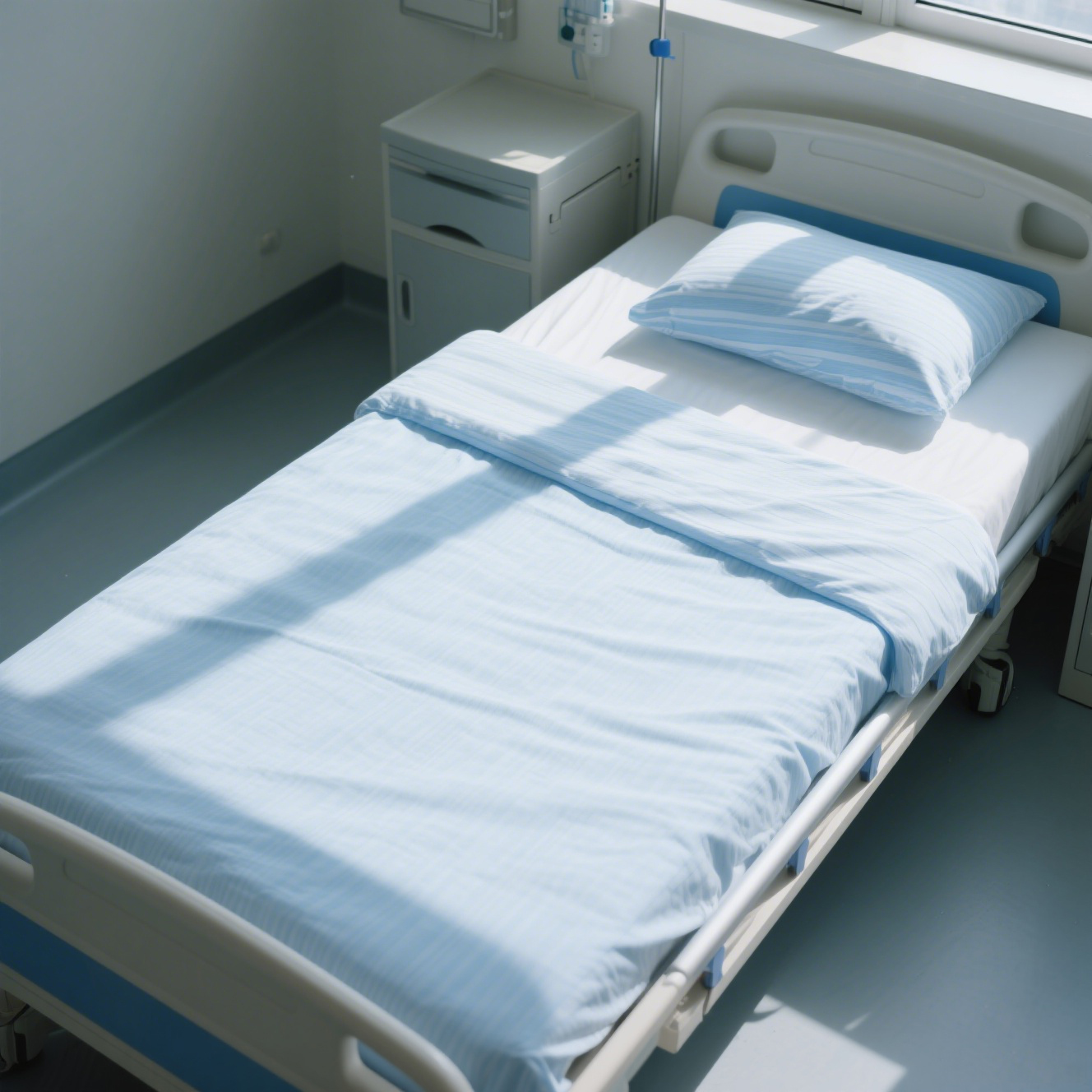
3. Analysis of the Four Core Advantages
3.1 100% pure cotton skin-friendly layer design
High-quality medical bedding features a skin-friendly pure cotton surface design. In the polyester-cotton blended fabric, 35% of the cotton content is strategically placed on the side that comes into contact with the skin. This innovative structure ensures that patients directly come into contact with natural cotton fibers rather than synthetic fibers, balancing the durability of polyester with the comfort of pure cotton. Pure cotton material has excellent moisture absorption and evaporation capabilities, which can quickly absorb and diffuse the sweat of patients, keeping the skin dry. It is particularly suitable for patients with fever and disabled elderly people. The Babyjia Hospital three-piece set adopts this design. User feedback indicates that "the elderly at home use it comfortably" and "it is also convenient to clean".
3.2 Active Dyeing Technology
The dyeing process for medical bedding not only concerns appearance, but also safety:
Traditional coating printing and dyeing: The dyes only adhere to the surface of the fibers and are prone to come off during washing, which may cause chemical substances to come into contact with the patient's skin. This poses a particular risk for elderly patients and children with delicate skin.
Active dyeing technology: The dye molecules form covalent bonds with the cotton fibers, becoming part of the fibers rather than a surface coating. This technology ensures that the blue stripes, white satin stripes, and pink satin stripes series of bedding products from Hanbi remain brightly colored, clear and natural even after being sterilized at 90℃ and repeatedly treated with powerful chlorine bleaching agents. 15 This active dyeing process also maintains the original softness and breathability of the fabric, avoiding the problem of fabric hardening caused by the coating.
3.3 Shrinkage Treatment and Water Wash Stability
The water-wash stability of medical bedding directly affects the service life and operational costs of the institution. Hanpi Textiles has solved this industry problem through advanced shrinkage-prevention technology:
Mechanical shrinkage: After the fabric is woven, it is shrinked in advance through a specially designed shrinkage machine under controlled temperature and humidity conditions.
High-temperature setting: Performing heat treatment under tension control to eliminate internal stress in the fibers.
Water washing test: 10 simulated industrial washes were conducted on a sample to test the dimensional stability.
This process ensures that the product achieves a shrinkage rate of less than 3%, which is much lower than the 8% or more shrinkage rate of ordinary cotton fabrics. 10 The purchasing standards of Guangzhou Chest Hospital clearly stipulate that "T/C density 130*70 ± 3%," emphasizing the importance of size stability. 14 The water washing stability is also reflected in the anti-wrinkling and shape retention aspect. For example, the hospital bed sheets sold by Amazon have a knitted structure design, and "there are almost no wrinkles when taken out of the dryer."
3.4 The Structural Advantages of High Spacing and High Density
High-count and high-density fabrics have multiple advantages in medical environments:
Barrier function: The 133×72 high-density structure forms a physical barrier, effectively preventing microorganisms, dander, and fine contaminants from penetrating the fabric, thereby reducing the risk of cross-infection. This is particularly important for immunocompromised patients, burn patients, and post-operative patients.
Durability enhancement: The combination of high-count yarn and fine combing process increases the single yarn strength by over 30%. The dense structure disperses external forces, making the fabric resistant to friction and snagging, and extending its service life. User reviews indicate "The fabric is thick and the quality is satisfactory", and "Second purchase intention".
Comfort retention: With the increase in the number of washes, ordinary bedding causes fiber breakage, resulting in the formation of balls on the fabric surface and a rough texture. The high-count and high-density fabric combined with the precision combing process effectively resists the problem of balling and maintains a smooth touch for a long time. 15. The Babyjia products clearly indicate the characteristics of "no balling, no fading" .
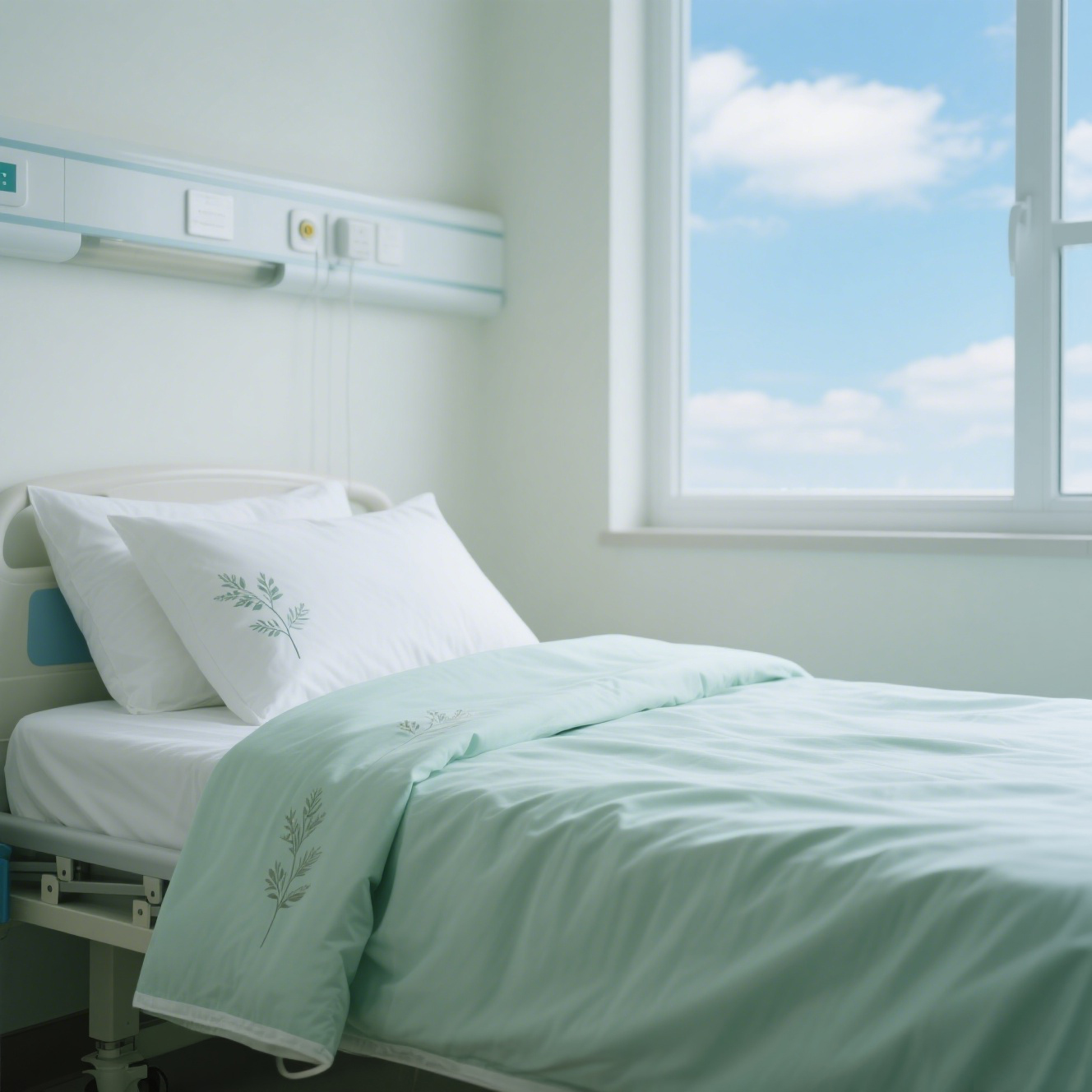
4. Professional washing and maintenance of medical bedding
Proper cleaning and maintenance are crucial for maintaining the performance and lifespan of medical bedding:
Disinfection and washing procedure:
Water temperature control: For the first wash, it is recommended to pre-treat with cold water. For subsequent regular washing, use water at a temperature of 60-90℃.
Detergent selection: Use alkaline detergent (pH 9-11) in combination with chlorine-based bleach to ensure the sterilization effect.
Special treatment for first wash: For cotton fabrics, do not use detergent for the first wash. Instead, soak them in a solution of 20 grams of salt and clean water to fix the color and prevent fading.
Dryness Precautions:
Avoid excessive drying: The drying temperature should not exceed 70℃, and the item should be left to dry naturally with 5-8% humidity remaining.
Not suitable for direct exposure to sunlight: Prolonged exposure to direct sunlight can cause the fibers to become brittle and shorten their service life.
Storage conditions:
Environmental requirements: A dry and well-ventilated storage environment with a relative humidity not exceeding 65%
Prevent contamination: Store clean bedding and used items separately and in different areas to avoid cross-contamination.
