





Since the early stage of development, hanbi has integrated its service knowledge and concepts accumulated in the hotel industry into the company's management, deeply understood the high requirements of high-end hotels for quality and style, and always pursued high quality products and design innovation. In the past 20 years, hanbi has served high-star hotels in more than 130 countries. We all pursue the exquisite quality of the hotel, and experience the Korean won products now, and start to enjoy the quality of life higher than the star hotel
×
Hospital linen cost saving options guide!
2025-01-09
In the big plate of hospital operating costs: linen procurement and management are often overlooked,
but it has an influence that cannot be underestimated. Hospital bed linen, as a direct contact with patients' supplies, is not
only related to health and comfort, but also every link of its procurement, use and maintenance is closely related to cost.
How to choose hospital bed linen wisely and realize effective cost control while ensuring the quality of medical service is a
problem that every hospital manager should think deeply about.
1.Accurately assess needs and eliminate waste
(1) Customized according to department differences
Different departments have completely different requirements for bed linen. For example, the general ward traffic is relatively
stable, the bedsheet replacement frequency is moderate, pay more attention to durability and easy cleaning; The operating
room, on the other hand, requires very high aseptic standards, with bed sheets that are antibacterial and impermeable, and
may have special size requirements depending on the type of surgery. Obstetrics and gynecology, pediatric wards may be
inclined to choose soft touch, mild color cloth, to bring psychological comfort to patients. Detailed statistics of the number of
beds, daily use, special needs, etc., to lay the foundation for accurate procurement.
(2) Inventory planning combined with patient flow
Analyze the patient flow data of the hospital in the past few years, and divide the obvious low and high seasons. Peak season,
such as winter flu season, infectious disease epidemic period, patients surge, bed sheet turnover speed up, the need for
sufficient reserve to cope with emergencies; In the off-season, the inventory is reasonably reduced to avoid the backlog of funds.
At the same time, considering new departments, bed expansion and other potential change factors, reserve a certain flexible
procurement space.
1.According to the differences of departments, different departments have completely different requirements for bed linen.
For example, the general ward traffic is relatively stable, the bedsheet replacement frequency is moderate, pay more attention
to durability and easy cleaning; The operating room, on the other hand, requires very high aseptic standards, with bed sheets
that are antibacterial and impermeable, and may have special size requirements depending on the type of surgery. Obstetrics
and gynecology, pediatric wards may be inclined to choose soft touch, mild color cloth, to bring psychological comfort to patients.
Detailed statistics of the number of beds, daily use, special needs, etc., to lay the foundation for accurate procurement.
2. Analyze the patient flow data of the hospital in the past few years according to the patient flow planning inventory, and divide the
obvious off-peak season. Peak season, such as winter flu season, infectious disease epidemic period, patients surge, bed sheet
turnover speed up, the need for sufficient reserve to cope with emergencies; In the off-season, the inventory is reasonably reduced
to avoid the backlog of funds. At the same time, considering new departments, bed expansion and other potential change factors,
reserve a certain flexible procurement space.
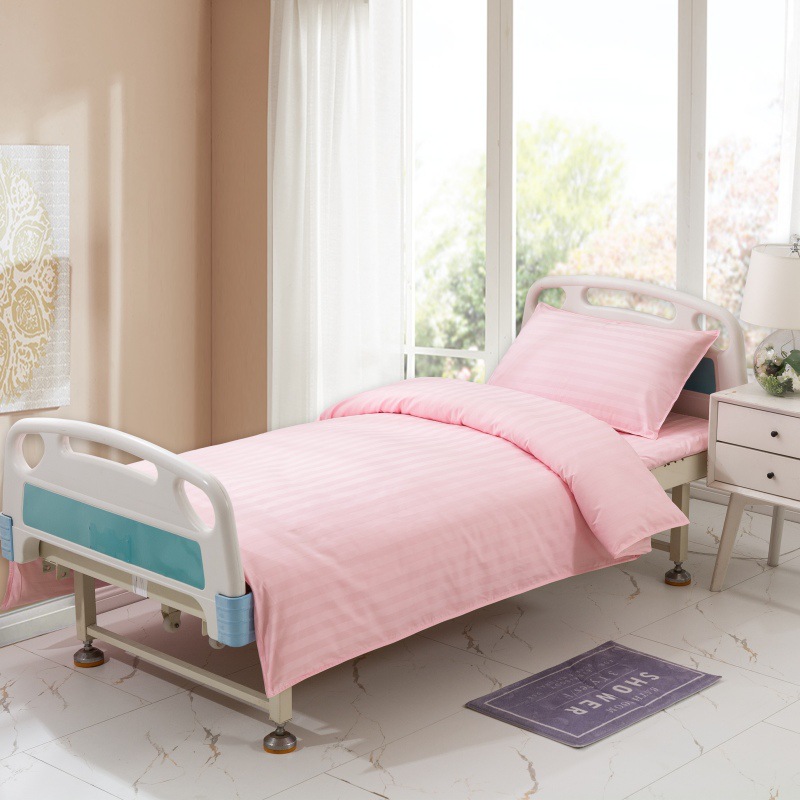
2.Material selection, weighing the pros and cons
1. Common material analysis
Pure cotton material: With its natural skin affinity, good moisture absorption is widely favored, can make patients feel comfortable,
especially suitable for long-term bed patients. However, its shortcomings are also more obvious, easy to shrink, deformation, frequent
washing will harden, poor durability, and drying speed is slow, increasing drying costs.
Polyester and cotton blend: combining the high strength and fast drying of polyester with some of the comfortable characteristics of
cotton, the cost performance is relatively high. It can still maintain a good shape after repeated washing, is not easy to wrinkle, wear
resistance is enhanced, but with the increase of polyester content, skin friendly feeling will decrease.
Functional chemical fiber materials: Some new chemical fiber materials have been developed for use in the medical field, such as
fibers with special functions such as antibacterial, antistatic, and ultraviolet protection. They can significantly improve the level of health
protection of bedsheets and reduce the growth of bacteria, but the cost is usually higher, and some materials may have poor air
permeability problems.
2. Cost-effective choice
Overall consideration, for general wards in non-critical sterile areas, poly-cotton blend material (cotton content 50%-60%) is a wise choice.
It can greatly reduce the loss cost caused by frequent replacement and washing under the premise of ensuring a certain degree of comfort.
In the operating room, intensive care unit and other key departments, pure cotton can be used as the main body, the local addition of
antibacterial chemical fiber composite material, taking into account comfort and protection, although the initial procurement cost is slightly
higher, but from the perspective of reducing the risk of infection, reduce long-term treatment costs, it is actually worth the money.
Procurement channel excavation, careful budgeting
(1) Advantages of traditional channels
Medical equipment fairs and professional medical textile suppliers are more reliable traditional procurement channels. At the exhibition,
we can contact many brands at one time, intuitively compare product quality and process details, and negotiate with manufacturers face
to face to cooperate, and strive for bulk procurement concessions, customized services, etc. Professional suppliers usually have a perfect
after-sales system, quick response to the special distribution and replacement needs of the hospital, and product quality has also been
tested by the market.
(2) Emerging e-commerce opportunities
E-commerce platforms have opened up new horizons for hospital procurement in recent years. Massive product information available
for screening, high price transparency, convenient price comparison. Some e-commerce companies have also launched exclusive
procurement and financial staging services for hospitals and other institutions to ease financial pressure. However, online shopping has
shortcomings such as the inability to directly touch and feel the material and the difficulty of quality control, which requires the hospital
procurement team to have stronger screening ability and ask for more samples for testing in the early stage.
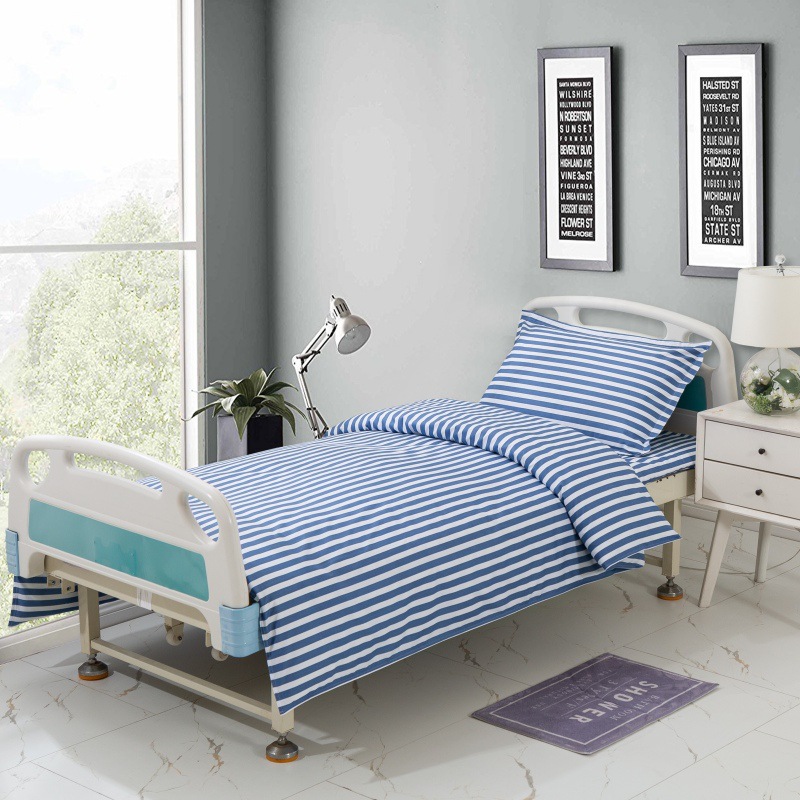
4, the whole life cycle cost control, extend the service life
1. Standardize the washing process
Cooperate with a professional washing company to develop a scientific washing program, according to the material of the bed sheet
classification washing, strict control of water temperature, detergent dosage, washing time. Avoid linen damage and fading caused by rough
washing, and regularly maintain the washing equipment to ensure that it is in good running condition and reduce secondary damage caused
by equipment failure.
2. Strengthen daily management
Establish a strict bedsheet replacement system in the hospital, medical staff in accordance with the provisions of the timely replacement of
contaminated bedsheets, to avoid excessive use of stains infiltration difficult to clean; Set up a special linen storage area to keep dry and
ventilated to prevent mildew. At the same time, the quality of the bed sheet is regularly checked, and it is found that the wear and tear are
seriously scrapped and replaced in time, so as not to affect the patient experience and the image of the hospital.
5. Conclusion
The cost control of hospital linen is not a simple "price war", but a fine management campaign throughout the whole process of procurement,
use and maintenance. Through accurate insight into the needs, smart selection of materials, smart development of procurement channels and
rigorous implementation of the whole life cycle management, the hospital can not only provide patients with high-quality, sanitary and comfortable
medical environment, but also tighten the cost "faucet" from the source, so that every penny of funds are spent on the edge of the knife, and
inject momentum for the sustainable development of the medical industry.
ReviewsNumber of comments: {{ page.total }}
I want to comment?
{{item.nickname ? (item.nickname.slice(0, 2) + '*****') : item.source === 1 ? 'mall buyer' : '--'}}
{{item.comment_time}}
Review in the {{item.country}}
Reviews
Merchant
{{replyItem.nickname ? (replyItem.nickname.slice(0, 2) + '*****') : replyItem.source === 1 ? 'mall buyer' : '--'}}
{{replyItem.parent_nickname ? (replyItem.parent_nickname.slice(0, 2) + '*****') : '--'}}
{{replyItem.is_merchant_reply === 1 ? replyItem.reply_time : replyItem.comment_time}}
Review in the {{replyItem.country}}
Reviews

No customer reviews
If you have more questions, write to us
Just leave your email or phone number in the contact form so we can send you a free quote for our wide range of designs!
Recommended
2023
01
11
We manufacture an extensive range of Premium and Luxury Bed linen, Bath linen, towels, Bed Sheets, mattress, pillows, and Hospital Linen products that are perfectly designed for the hospitality and hospital industry.
Telephone: 0771-5585836
Email: hanbiyan1@gmail.com
Phone: +86 15878178593
WhatsApp: +86 15878178593
WeChat: 15878178593
Address: Shop No. 201, 2nd Floor, Building 17, Nanning Country Garden Times City, No. 496 Kunlun Avenue, Santang Town, Xingning District, Nanning City, Guangxi Zhuang Autonomous Region
Copyright © 2026 HANBI - www.hanbi-hotelsupplies.com | Sitemap Privacy Policy